

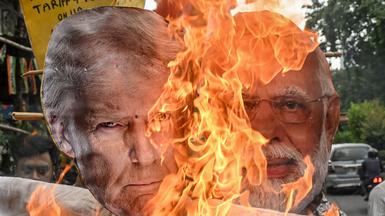
NATIONAL: Modi Defies Trump’s Tariff Hike Over India’s Russia Oil Imports
Escalation of US Tariffs on India
US President Donald Trump escalated trade tensions by doubling tariffs on Indian imports from 25% to 50%, citing India’s continued oil purchases from Russia. The initial 25% tariff took effect on August 7, with the additional 25% set to apply from August 27. This move targets India’s $86 billion export market, particularly impacting textiles, aquaculture, and leather sectors.
Modi’s Indirect Rebuttal
Speaking at an event in Delhi on August 7, 2025, commemorating the birth anniversary of agricultural scientist M.S. Swaminathan, Prime Minister Narendra Modi indirectly addressed the US tariffs. Without naming the US, Modi emphasized, “The welfare of farmers is our top priority. We will never compromise on the interests of farmers, fishermen, and dairy farmers.”
India’s Commitment to Farmers
Modi underscored India’s readiness to bear any cost to protect its agricultural community, stating, “I am personally ready to pay any price to safeguard farmers’ interests.” This stance reflects the political sensitivity of agricultural tariffs, a longstanding point of contention in India-US trade negotiations. India has resisted US demands to lower tariffs on American agricultural imports, citing potential harm to domestic farmers.
Sectors Hit by US Tariffs
The US tariffs will immediately affect key Indian industries, with significant implications for:
- Textiles, shrimp, and leather products
- Animal products and related exports
These sectors, critical to India’s economy, face increased costs and potential market disruptions in the US, a major trading partner.
Exemptions Provide Limited Relief
Certain Indian exports are exempt from the tariffs, including:
- Pharmaceuticals, energy products, and key minerals
- Semiconductors, computers, tablets, and smartphones
However, these exemptions cover only a small portion of India’s exports, offering minimal economic respite amidst the broader tariff impact.
Roots of US-India Trade Friction
The US has long pressed India to reduce tariffs on its agricultural exports, a demand India has resisted to protect its farmers. Failed negotiations on this issue, combined with US objections to India’s Russian oil imports, appear to have prompted the tariff hike. The selective targeting of India, while sparing other nations like China and Turkey, has fueled accusations of unfair trade practices.
India’s Strategic Dilemma
India’s reliance on Russian oil, driven by economic necessity, has placed it at odds with US geopolitical priorities. The tariffs could increase India’s annual oil import costs by $9-11 billion if it shifts away from Russian supplies. This economic pressure may push India to diversify trade partners or pursue legal recourse through the World Trade Organization.
Modi’s Defiant Posture
Modi’s remarks signal a resolute stance against external pressure, framing the tariff issue as a matter of national sovereignty and farmer welfare. By prioritizing domestic interests, India aims to rally public support while navigating the economic fallout of strained US relations.
Global Trade Implications
The tariff escalation highlights broader tensions in global trade, with India caught between economic pragmatism and geopolitical expectations. The US’s punitive measures risk alienating a key strategic partner, potentially reshaping India’s trade alliances and strengthening ties with non-Western economies.
Future Outlook
India is likely to explore diplomatic and legal avenues to counter the tariffs while accelerating efforts to reduce reliance on the US market. Modi’s unwavering commitment to farmers underscores the domestic political stakes, setting the stage for a protracted trade dispute with significant global ramifications. Roots of US-India Trade Friction
The US has long pressed India to reduce tariffs on its agricultural exports, a demand India has resisted to protect its farmers. Failed negotiations on this issue, combined with US objections to India’s Russian oil imports, appear to have prompted the tariff hike. The selective targeting of India, while sparing other nations like China and Turkey, has fueled accusations of unfair trade practices.