

INTERNATIONAL: Is the US Guilty of Trade Double Standards?
Trump’s Unawareness of US-Russia Trade
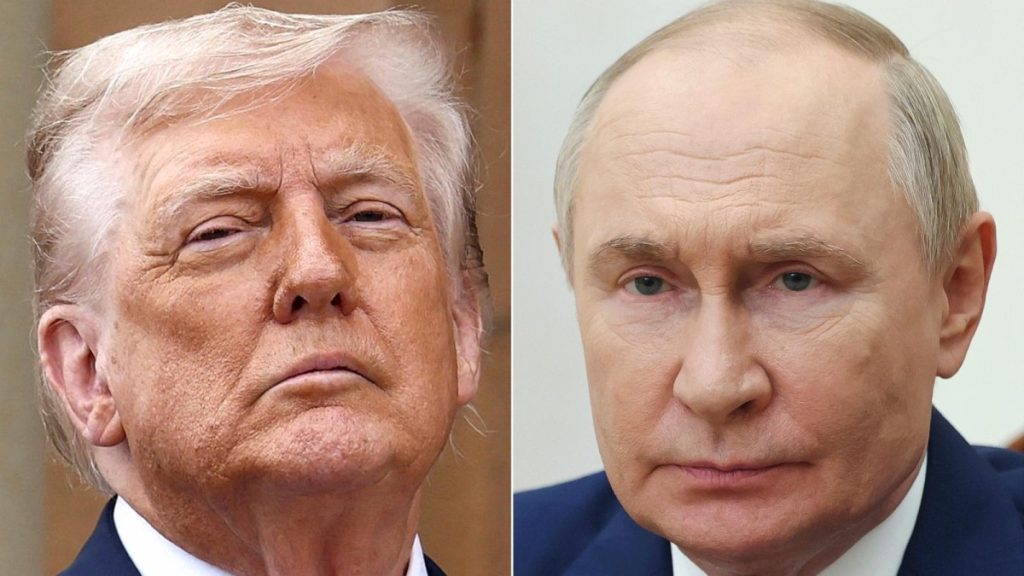
US President Donald Trump expressed surprise when confronted with India’s claims that the United States continues to import uranium, fertilizers, and chemicals from Russia.
Responding to reporters, Trump stated, “I don’t know anything about it. I have to check it out,” highlighting a potential oversight in his administration’s trade policy.
This admission came amid India’s accusations of hypocrisy by the US and European Union for criticizing its Russian oil imports while maintaining their own trade ties with Moscow.
India’s Critique of Western Double Standards
India’s Ministry of External Affairs issued a sharp rebuke, labeling Western criticism of its Russian oil purchases as “unjustified and unreasonable.”
The ministry underscored that American companies imported $1.27 billion in fertilizers, $624 million in uranium, and $878 million in palladium from Russia in 2024, despite sanctions rhetoric. India argues that its energy imports are driven by economic necessity, contrasting with perceived leniency toward US and EU trade with Russia.
Strategic Tariffs and Selective Enforcement
Trump’s administration has imposed a 50% tariff on Indian imports, effective August 27, 2025, citing India’s continued oil purchases from Russia.
Notably, China and Turkey, also significant importers of Russian oil, face lower tariffs of 30% and 15%, respectively, raising questions about selective enforcement.
This disparity has fueled India’s contention that the US is unfairly targeting it while overlooking larger trade partners like China.
Diplomatic Push Amid Ukraine Deadline
Trump’s special envoy, Steve Witkoff, met Russian President Vladimir Putin in Moscow to discuss a potential ceasefire in the Ukraine conflict, with a US-imposed deadline looming on August 8.
The three-hour meeting, described as “useful and constructive” by Kremlin aide Yuri Ushakov, aimed to address the ongoing war, though no concrete breakthroughs were reported.
Trump called the talks “highly productive” but signaled that secondary sanctions on Russia are still expected by Friday.
Signals Exchanged, Uncertainty Persists
Kremlin sources indicated that both sides exchanged “signals” on the Ukraine issue, with discussions also touching on potential US-Russia strategic cooperation.
However, with Russia’s continued military actions, including a deadly strike in Ukraine’s Zaporizhzhia region, skepticism remains about the feasibility of a near-term ceasefire.
Ukrainian President Volodymyr Zelenskyy emphasized the need for a “lasting and reliable peace” following the talks.
Economic and Geopolitical Ramifications
The US tariffs on India threaten to disrupt its $86 billion export market, particularly impacting textiles, leather, and aquaculture. India’s government has vowed to protect its interests, potentially through World Trade Organization challenges or trade diversification.
The selective tariff strategy risks escalating tensions with India, a key strategic partner, while failing to address China’s larger role in Russian oil imports.
Global Trade and Power Dynamics
India’s accusations highlight broader inconsistencies in global trade policies amid the Russia-Ukraine conflict.
The US’s continued imports of Russian commodities, coupled with its punitive measures against India, underscore a complex interplay of economic necessity and geopolitical strategy.
Former US Ambassador Nikki Haley cautioned against alienating India, a vital ally, while giving China a “pass.”
Future Diplomatic Moves
Trump hinted at a potential meeting with Putin as early as next week, possibly followed by a trilateral discussion with Zelenskyy, to push for a Ukraine ceasefire.
However, with Russia maintaining its maximalist war aims and no clear concessions offered, the efficacy of these diplomatic efforts remains uncertain.
The outcome of these talks could shape US-Russia relations and global trade dynamics.
India’s Strategic Response
India’s Ministry of External Affairs reiterated its commitment to safeguarding national interests, potentially exploring alternative markets or retaliatory measures.
The tariffs could increase India’s annual oil import costs by $9-11 billion if it is forced to abandon Russian supplies, prompting a reevaluation of its energy and trade strategies.
Analysts predict India may strengthen ties with non-Western partners to offset economic pressures.
A Test for Global Diplomacy
The convergence of Trump’s tariff policies and diplomatic overtures underscores the delicate balance between economic sanctions and geopolitical negotiations.
As the US navigates its dual role as a trade enforcer and peace mediator, the international community watches closely for signs of coherence in its foreign policy approach, particularly regarding strategic allies like India.