

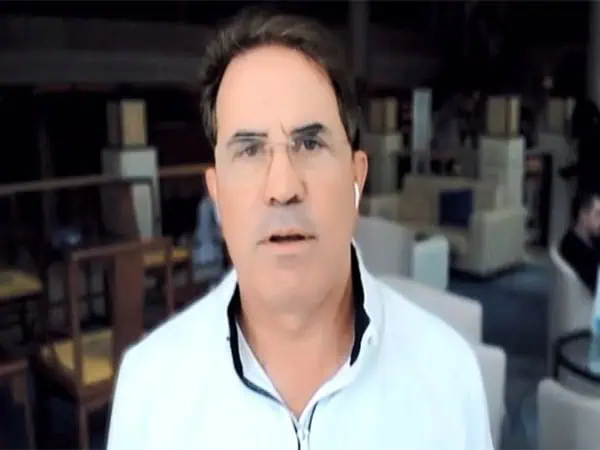
INTERNATIONAL: Rick Sanchez Slams Trump’s Tariff Blunder on India
American political analyst Rick Sanchez has sharply criticized US President Donald Trump’s imposition of steep tariffs on India, labeling the policy as misguided and reflective of a superficial understanding of global dynamics.
Sanchez argues that penalizing India for its Russian oil imports disregards New Delhi’s sovereign decision-making. This critique, voiced in an ANI interview, highlights potential geopolitical ramifications of US trade strategies.
Misguided Tariff Strategy
Sanchez condemned the 50% tariffs on Indian goods, comprising a 25% base levy and an additional 25% penalty for purchasing Russian oil, as an “ignorant” approach that treats India like a “schoolchild.”
He asserts that India’s resolute stance—asserting autonomy over its energy procurement—marks a pivotal moment in global relations. This policy, he contends, risks alienating a key ally.
India’s Sovereign Assertion
India’s refusal to bow to US pressure, Sanchez noted, underscores its status as a mature global player, not a subordinate entity.
New Delhi’s insistence on maintaining its Russian oil imports, which constitute over 35% of its supply, reflects strategic energy security priorities. This defiance could reshape international alliances, challenging US hegemony.
Risk of Global South Coalition
Sanchez warned that Trump’s tariffs may inadvertently catalyze a unified front among Global South nations, including India, China, Russia, South Africa, and Brazil.
These countries, representing nearly half the world’s population, could form a formidable economic bloc, potentially diminishing Western dominance. He views this as a historic shift in global power dynamics.
Personal Vendetta Allegations
A report by Jefferies suggests that Trump’s tariffs stem from “personal pique” over India’s rejection of his claimed role in brokering an India-Pakistan ceasefire during Operation Sindoor.
Sanchez concurred, noting Trump’s history of decisions driven by grudges rather than strategic foresight. India has clarified that the ceasefire was a bilateral military arrangement, not a US-mediated outcome.
Inconsistent US Policy
Sanchez highlighted the selective application of tariffs, noting that China, the largest importer of Russian oil, faces no similar penalties due to economic interdependencies.
This inconsistency, he argued, undermines US credibility and exposes a lack of coherent policy rationale. Such haphazard measures could erode domestic support for Trump’s trade agenda.
Economic and Geopolitical Fallout
The tariffs threaten India’s export sectors, including textiles and gems, potentially reducing US-bound exports by 40–50%. Sanchez cautioned that alienating India could push it toward closer ties with BRICS nations, reshaping global trade alignments.
Indian officials have labeled the tariffs “unjustified,” emphasizing continued trade talks to mitigate impacts.
Domestic and Global Critique
Sanchez noted growing US domestic opposition to Trump’s tariff regime, with critics arguing it may harm American consumers through higher prices.
Economists like Jeffrey Sachs have warned that such policies violate international law and could isolate the US geopolitically. India’s strategic pivot toward self-reliance and multi-alignment may further dilute US influence.