

INTERNATIONAL: White House Pushes Europe to Sanction India’s Oil Trade
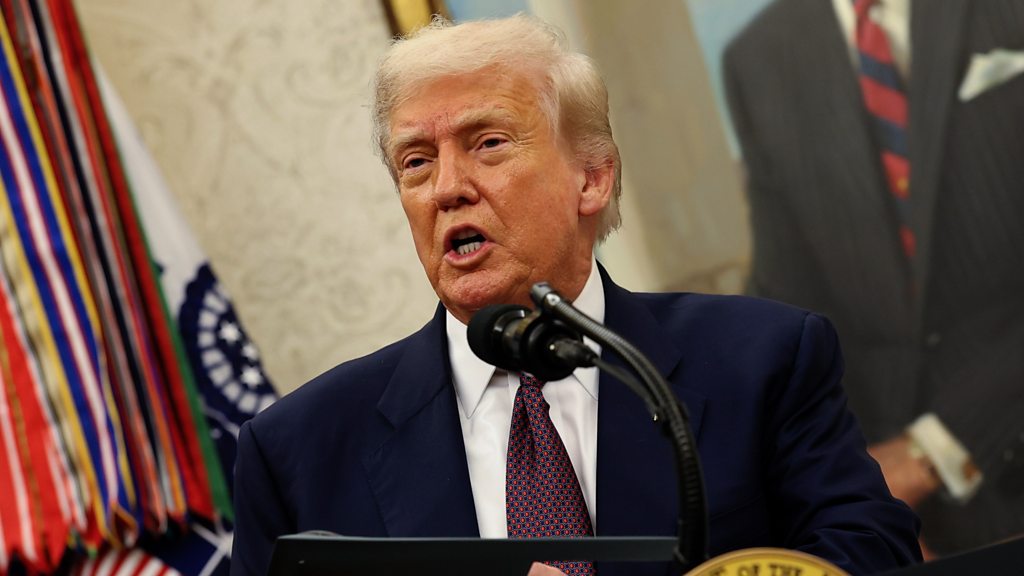
US President Donald Trump’s imposition of 50% tariffs on Indian imports, driven by New Delhi’s continued procurement of Russian oil, has escalated geopolitical tensions, prompting the White House to urge European allies to adopt similar punitive measures.
This development coincides with India’s strategic engagements at the Shanghai Cooperation Organization (SCO) summit in Tianjin. The unfolding scenario underscores a complex interplay of trade, diplomacy, and global alliances.
Escalation of US Tariffs on India
The Trump administration doubled tariffs on Indian goods to 50%, comprising a 25% base levy and an additional 25% penalty for India’s Russian oil purchases, effective from August 27, 2025.
This policy aims to pressure India to cease importing Russian crude, which constitutes over 35% of its oil supply. India has labeled the tariffs “unjustified and unreasonable,” highlighting its energy security imperatives.
White House’s Call to Europe
Senior White House officials have reportedly pressed European nations to mirror US sanctions by imposing secondary tariffs on India and halting purchases of its oil and gas exports.
European leaders, however, have remained largely silent, neither endorsing nor opposing the US stance, revealing a divergence in Western approaches to India’s trade policies. This reticence underscores strained transatlantic coordination on sanctions enforcement.
Trump’s Diplomatic Push on Ukraine
Trump’s recent summit with Russian President Vladimir Putin in Alaska aimed to broker a ceasefire in the Russia-Ukraine conflict, though no immediate agreement was reached.
The White House views India’s oil imports as indirectly sustaining Russia’s war efforts, prompting threats of further sanctions if Moscow does not comply by a stipulated deadline. Some European leaders have cautiously supported Trump’s peace initiatives, complicating the tariff narrative.
India’s SCO Summit Engagement
Prime Minister Narendra Modi’s attendance at the SCO summit in Tianjin, his first visit to China since 2018, signals India’s strategic recalibration amid US pressures.
Modi is expected to hold bilateral talks with Putin and Chinese President Xi Jinping, addressing trade disputes and the Ukraine conflict. These discussions could shape India’s response to Western sanctions.
India’s Defiant Stance
India defends its Russian oil imports as a necessity to stabilize global energy markets, noting that its trade volume of 1.75 million barrels daily from January to June 2025 prevents price spikes.
New Delhi has criticized Western hypocrisy, pointing out continued US and EU trade with Russia, including $3.5 billion in US-Russia trade in 2024. Foreign Minister S. Jaishankar emphasized that India’s actions align with both national and global interests.
Potential Global South Realignment
The tariffs risk pushing India closer to China and Russia, fostering a strategic triad within the SCO framework, with a combined GDP of $53.9 trillion.
Experts suggest this alignment could challenge US economic dominance, especially as India, China, and Russia trade in local currencies to counter dollar reliance. Such a shift may herald a new multipolar economic order.
Economic and Diplomatic Stakes
India’s economy faces potential GDP growth reduction below 6% due to sustained tariffs, impacting sectors like pharmaceuticals and electronics.
Modi’s call for ‘swadeshi’ goods and GST reforms aims to bolster domestic resilience. The SCO summit offers India a platform to navigate these challenges through strengthened ties with Beijing and Moscow.