

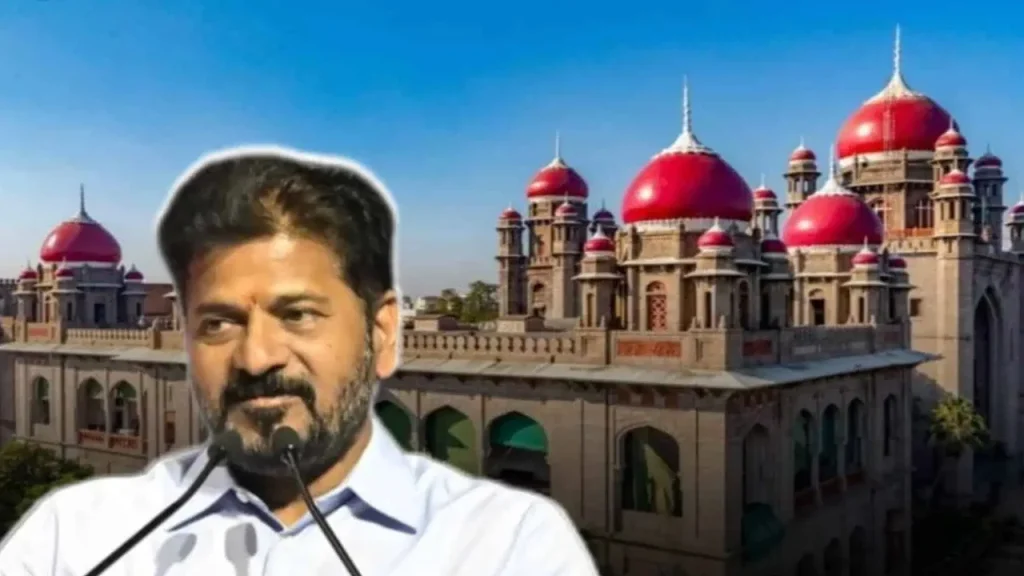
TELANGANA: Revanth Govt to Move Supreme Court on BC Quota Verdict
The article you’ve shared covers a significant development in Telangana’s political landscape, focusing on the Telangana High Court’s interim stay on Government Order (GO) No.9, which aimed to provide 42% reservation for Backward Classes (BCs) in upcoming local body elections.
This order, issued on September 26, 2025, by the Revanth Reddy-led Congress government, sought to enhance political representation for BCs based on a recent caste enumeration survey indicating they comprise about 57.6% of the state’s population.
The total reservation under this proposal—42% for BCs, 15% for Scheduled Castes (SCs), and 10% for Scheduled Tribes (STs), would exceed the 50% cap established by Supreme Court precedents like Indra Sawhney v. Union of India (1992), pushing it to 67%.
The High Court’s decision, delivered on October 9, 2025, by a division bench comprising Chief Justice A.P. Singh and Justice G.M. Mohiuddin, came after two days of arguments on petitions filed primarily by the Bharat Rashtra Samithi (BRS).
The court stayed both GO No. 9 and the election notification process, adjourning the matter for four weeks to allow the government to file a counter-affidavit, with petitioners given two weeks thereafter to respond.
This has sparked protests by BC groups outside the High Court and raised concerns about delays in the long-overdue local body polls, originally scheduled to begin notifications on October 10.
Key Statements from Minister Vakiti Srihari
In a press conference in Hyderabad on the same day (October 9), Minister for Social Welfare Vakiti Srihari (also holding portfolios related to BC welfare) reaffirmed the government’s commitment to the 42% quota. His remarks align closely with the article:
- No Retreat on Promise: He emphasized that the quota is a “historic decision” for social justice and assured BC communities that the verdict would not derail implementation. “We will not go back; this is our promise to BCs,” he stated, urging them not to lose hope.
- Accusations Against Opposition: Srihari blamed a “conspiracy” by BRS (which filed the petitions) and Bharatiya Janata Party (BJP) for blocking BC empowerment. He highlighted the government’s strong arguments in court, calling the stay “unfortunate.”
- Legal Roadmap: Upon receiving the full verdict copy, a high-level review with Chief Minister Revanth Reddy and legal experts will decide on challenging it in the Supreme Court or pursuing alternative actions. “We are ready to fight legally at all costs,” he added.
This stance echoes sentiments from other Congress leaders, like BC Welfare Minister Ponnam Prabhakar, who called the stay “unexpected” and a blow to overdue reforms.
Broader Context and Reactions
- Legal Backdrop: The petitions argued that GO No.9 violates Section 285A of the Telangana Panchayat Raj Act, 2018, which caps combined reservations for SCs, STs, and BCs at 50% in local bodies.
Petitioners also cited the Supreme Court’s K. Krishna Murthy v. Union of India (2010) ruling, which reinforced this limit for panchayats and municipalities.
Notably, the Supreme Court on October 6, 2025, dismissed a direct challenge to GO No.9, directing petitioners to approach the High Court instead, viewing it as a procedural misuse of Article 32.
Impact on Elections: The stay halts the poll process announced by the State Election Commission on September 29, potentially delaying elections by at least six weeks.
This affects Mandal Parishad, Zilla Parishad, and municipal polls across rural and urban areas.
Public Discourse on X (formerly Twitter): Recent posts reflect real-time reactions, with users like @policyunpacked8 noting the stay and court timelines, amplifying calls for BC solidarity.
Broader sentiment shows support for the government’s appeal plans, with hashtags like #BCReservation and #TelanganaHighCourt trending locally.
Potential Next Steps
The government’s plan to approach the Supreme Court, as outlined by Srihari, hinges on the full verdict’s receipt (expected imminently).
If appealed, it could invoke Articles 243D(6) and 243T(6) of the Constitution, which allow states flexibility in local body reservations beyond the 50% cap under exceptional circumstances (e.g., post-caste survey data).
However, success isn’t guaranteed, given the High Court’s procedural scrutiny on data publication and public objections.
This issue underscores ongoing tensions in Telangana over reservation policies, balancing electoral promises with constitutional bounds.
BC groups’ backing suggests sustained pressure on the government to push forward, potentially reshaping local governance if upheld.
For updates, monitoring official notifications from the Telangana State Election Commission or Supreme Court filings will be key.