

NATIONAL: Delhi Car Bomb Plot Deepens With New Arrests
A devastating car bomb explosion near Delhi’s Red Fort Metro Station on November 10 has unraveled a chilling plot orchestrated by medical professionals.
The attack claimed 13 lives and injured over 20 others, exposing a network of educated individuals from Jammu and Kashmir with ties to extremist groups.
As investigators piece together the evidence, questions linger about how such a scheme evaded detection for months.
Blast Confirmation Through Forensics
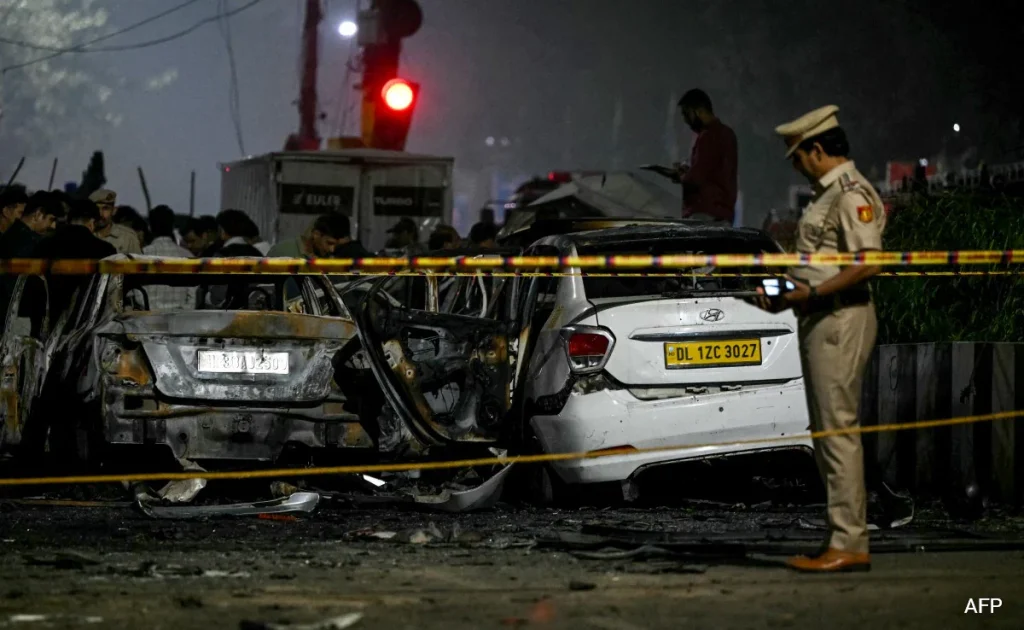
DNA analysis has definitively linked Dr. Umar Nabi, an assistant professor at Al-Falah University in Faridabad, Haryana, to the white Hyundai i20 that detonated at the busy signal.
A severed leg recovered from the wreckage between the steering wheel and accelerator matched samples from Nabi’s mother, confirming he was behind the wheel at the time of the blast.
The explosion reduced the vehicle to charred remains, while a severed hand found on a nearby shop roof awaits forensic results.
Another victim, critically injured in the initial chaos, succumbed to wounds on Thursday, pushing the death toll higher.
Authorities recovered a red Ford EcoSport and a Maruti Brezza from separate locations, including the university campus, for detailed examination.
Key Suspects in the Crosshairs
Four doctors stand at the center of this unfolding case: Umar Nabi, Muzammil, Adil, and Shaheen.
Intelligence points to eight individuals overall plotting improvised explosive device attacks across four major cities. Nabi’s role as the driver underscores the personal stakes in their radical agenda.
Recent arrests include Dr. Farooq, an assistant professor from GS Medical College in Hapur, Uttar Pradesh, detained by Delhi Police.
Dr. Mohammad Arif Mir, a 32-year-old cardiology student from Anantnag, Kashmir, was apprehended by Uttar Pradesh’s Anti-Terrorism Squad in Kanpur.
Both hail from Jammu and Kashmir and studied at Al-Falah University, where Shaheen also served as faculty.
- Arif’s hasty attempt to erase phone data during the raid yielded crucial call logs and messages tying him to the Delhi conspirators.
- All suspects reportedly shared a single email address for sensitive communications.
- Shaheen’s interrogation reportedly named Arif, highlighting fractures within the group.
Material Trail and Financial Footprints
Probe teams seized Rs.26 lakh in cash, funneled toward operational costs, with Nabi handling maintenance expenses.
The group acquired 32 second-hand vehicles, including cars, to serve as bomb carriers.
Forensic tests on the EcoSport revealed traces of ammonium nitrate, a key explosive component.
They purchased 26 quintals of fertilizer for Rs.3 lakh, intended for IED fabrication, with transaction records now in police custody.
The Maruti Brezza, registered in Haryana, underwent scrutiny by Kashmir Police at the university site. These findings suggest meticulous preparation spanning months.
Clues from Diaries and Internal Rifts
Seized notebooks from Nabi and Muzammil outline activities from November 8 to 12, listing 25 names mostly from Jammu and Kashmir or Faridabad.
Cryptic codes hint at further strikes, prompting urgent decryption efforts by security agencies.
A reported dispute between Nabi and Muzammil over fund allocation may have accelerated the Delhi detonation, possibly altering timelines or targets.
Investigators explore whether this infighting derailed broader plans or stemmed from external pressures.
Muzammil’s sympathies toward ISIS affiliate Ansar Ghazwatul Hind, alongside efforts with another associate to form a splinter cell, raise alarms about evolving threats.
Past seizures of weapons in 2023 and 2024 could connect to this network, as probes widen to dismantle the full structure.
Two Gujarat Anti-Terrorism Squad arrests involved suspects who attended the same Uttar Pradesh madrassa, pointing to long-standing radicalization pathways.
Government Response and Future Scrutiny
Union Home Minister Amit Shah convened a review of the investigation’s progress, emphasizing coordinated action.
The government mandated a thorough audit of Al-Falah University’s operations amid concerns over its role as a planning hub.
Agencies continue tracing prior terror links among the accused while monitoring for plots in additional cities.
This case highlights vulnerabilities in educational institutions and the need for vigilant intelligence sharing.
As the net tightens, the focus remains on preventing escalation in an already tense security landscape.