

INTERNATIONAL: Trump’s Eighth: Gaza Done, Pak-Afghan Next?
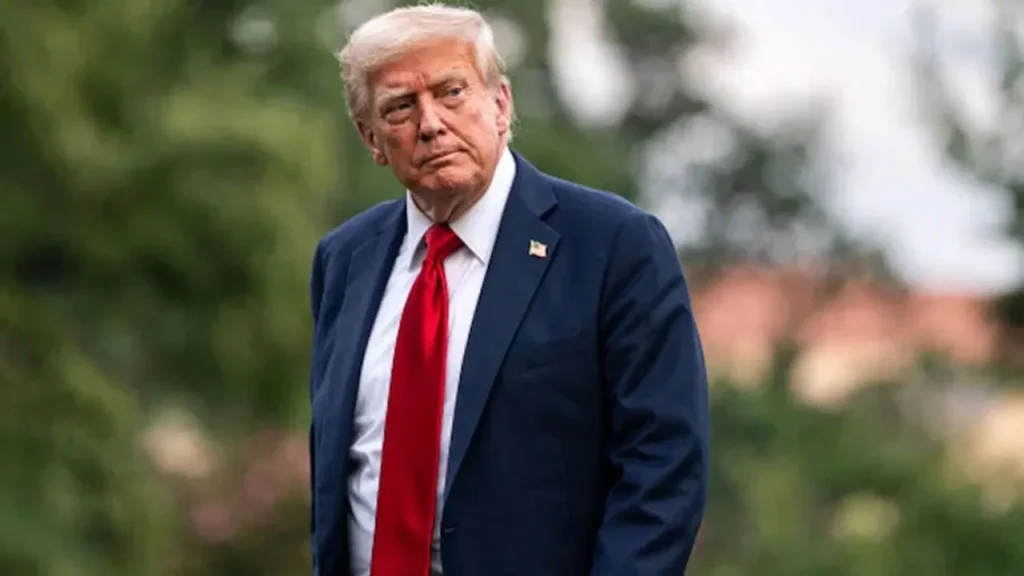
President Donald Trump, en route to the Middle East aboard Air Force One, touted his track record in quelling global conflicts, declaring the Gaza war his latest victory.
Amid celebrations of a hard-won ceasefire and hostage releases, he turned eyes toward simmering border tensions between Pakistan and Afghanistan.
With characteristic flair, Trump vowed to wrap up that clash before wheels touch down, cementing his self-proclaimed expertise in diplomacy.
Peacemaker’s Playbook
Trump’s itinerary includes addressing Israel’s Knesset and co-chairing talks on the Gaza truce, a deal hailed as the first phase toward lasting calm.
He credited relentless U.S. pressure for the breakthrough, insisting it’s the eighth major war he’s halted since taking office.
Reporters caught his off-the-cuff pledge on the Pakistan-Afghanistan front, where recent skirmishes have claimed lives on both sides of the Durand Line.
The president’s confidence stems from past successes, he said, pointing to unconventional tools like economic leverage.
As the plane hummed toward West Asia, Trump painted a picture of swift resolutions, leaving little doubt about his intent to broker peace on multiple fronts.
Tariffs as Truce-Makers
Trump revisited his role in defusing the India-Pakistan standoff, claiming a 24-hour turnaround after threatening tariffs as high as 200 percent.
“Without that hammer, we’d still be watching missiles fly,” he remarked, framing trade policy as a sharper sword than sanctions alone.
The move, he argued, forced both nations to the table, averting escalation in a nuclear-shadowed rivalry.
Skeptics question the full extent of U.S. influence, but Trump’s narrative underscores his administration’s blend of carrot and stick.
From South Asia to Southeast Asia, he listed similar interventions, like easing frictions between Thailand and Cambodia, as proof of a tariff-fueled foreign policy.
Ukraine’s Long-Range Leverage
Shifting to Europe, Trump outlined a firmer line on the Russia-Ukraine war, fresh off a Sunday call with President Volodymyr Zelensky.
He warned that without Moscow’s concessions, Washington could greenlight Tomahawk cruise missiles for Kyiv, ramping up battlefield pressure on Russian forces.
“It’s the smart play to push Putin toward sense,” Trump stated, emphasizing the weapons’ role in tipping the scales.
Zelensky, in response, assured targeted use against military assets only, aiming to reassure allies while bolstering defenses.
The discussion, per White House logs, focused on logistics and timelines, signaling a potential shift in U.S. aid strategy.
Moscow’s Stark Warning
Russian President Vladimir Putin swiftly countered, signaling that such deliveries would shatter U.S.-Russia ties and heighten global risks.
Kremlin spokesman Dmitry Peskov echoed the alarm, noting that long-range strikes into Russian territory could mimic nuclear threats, demanding careful consideration from military minds worldwide.
“This isn’t brinkmanship; it’s a red line,” Peskov added, underscoring the Kremlin’s view of dramatic escalation.
The exchange highlights fragile dynamics, with experts watching for ripples in NATO-Russia dialogues.
As Trump eyes direct talks with Putin, the missile threat hangs as both deterrent and diplomatic accelerant.
Inside the Tomahawk Arsenal
At the heart of the Ukraine debate lies the Tomahawk, a staple of U.S. precision strikes since the 1980s.
Developed during the Cold War by General Dynamics, this submarine- and ship-launched missile boasts a 1,600-kilometer range and subsonic speeds topping 880 km/h.
Debuting in the 1991 Gulf War with 297 launches—282 on target—it has shaped operations in Iraq, Syria, and beyond, each unit costing around $2 million.
Trump’s rhetoric blends bravado with strategy, but as ceasefires take hold and threats loom, the world waits to see if words turn to action or pave paths to pacts.