

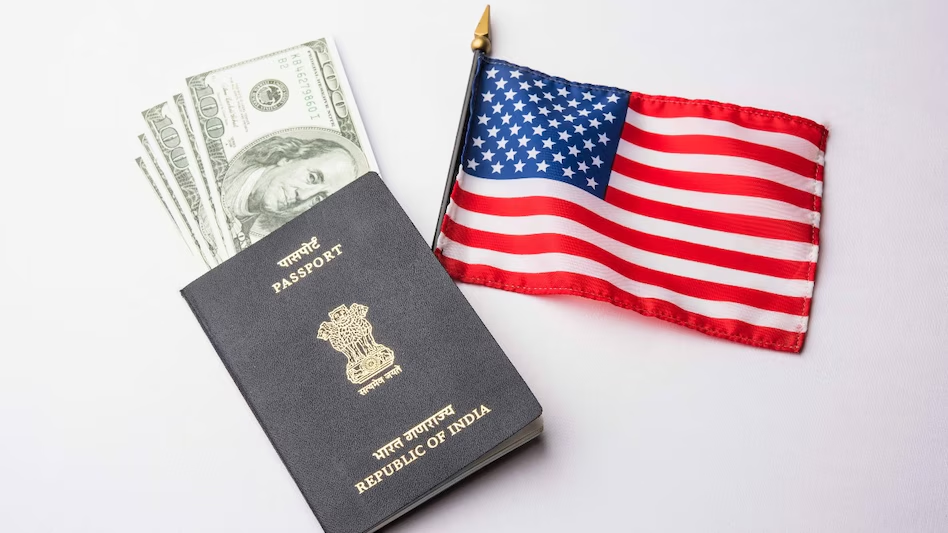
Washington, DC: Trump’s $100K H-1B Levy: Visa Dreams in Jeopardy?
In a move that could reshape the landscape for skilled foreign workers, President Donald Trump has signed an executive order imposing a steep $100,000 annual fee on each H-1B visa application. This policy targets companies hiring overseas talent, aiming to prioritize American jobs amid ongoing debates over immigration and workforce development.
The decision, effective immediately, requires U.S.-based firms to pay the fee for every H-1B visa they sponsor. Without this payment, entries for these workers will be restricted starting September 21, 2025. Commerce Secretary Howard Lutnick confirmed the rollout, noting that major corporations have already been briefed on the changes.
Prioritizing American Talent
Lutnick emphasized the shift toward domestic training during a media briefing. “If you’re looking to train someone, turn to our top universities and give those opportunities to Americans,” he stated, underscoring the administration’s goal to curb what it sees as outsourcing of U.S. jobs. This comes as the H-1B program, designed for highly skilled professionals, faces renewed scrutiny.
The policy is expected to hit hardest in tech hubs, where foreign expertise drives innovation. Trump highlighted support from the technology sector, claiming it would foster greater investment in local talent. Yet, responses from industry giants like Apple, Google, and Meta remain pending, leaving questions about potential pushback.
Impact on Global Applicants
India, which accounts for 71% of H-1B approvals, stands to feel the most immediate effects, followed by China at 11.7%. The program currently issues up to 85,000 visas annually through a lottery system, with fees traditionally covering basic processing—often borne by employers. This new levy could add billions in costs, prompting companies to rethink hiring strategies.
Introduced in 1990 to attract top global minds, H-1B visas typically last three to six years. Many recipients secure high-level roles in fields like software engineering and data science. With the added financial hurdle, experts predict a slowdown in cross-border talent flows, potentially benefiting U.S. graduates but straining innovation pipelines.
The Gold Card Alternative Emerges
In parallel, Trump unveiled the “Gold Card” program, a fast-track residency option for wealthy individuals. Priced at $1 million per applicant—or $2 million for corporate sponsorships—it promises expedited paths to U.S. citizenship after vetting. The initiative could generate up to $100 billion, earmarked for tax relief, infrastructure projects, and debt reduction.
This premium pathway contrasts sharply with the H-1B overhaul, offering a lucrative entry for high-net-worth foreigners while tightening rules for skilled workers. As details unfold, it signals a broader pivot in U.S. immigration toward revenue generation and economic nationalism.