

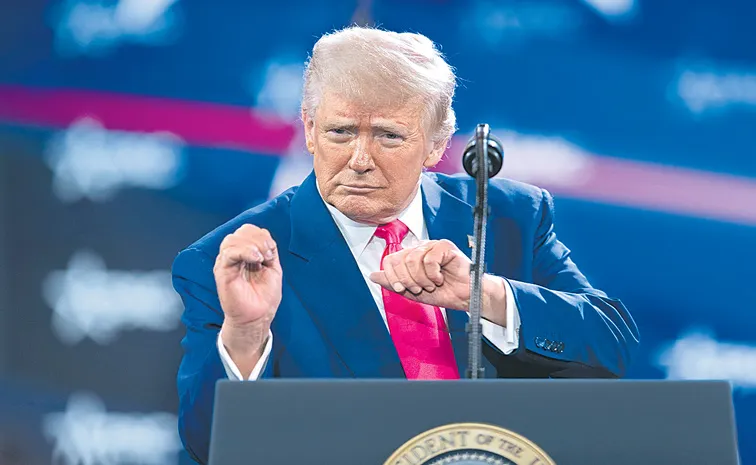
INTERNATIONAL: Trump Shifts Claim: Stopped Three Wars, Not Seven
Presidential Peace Narrative Evolves
US President Donald Trump, long positioning himself as a harbinger of global stability, has adjusted his longstanding assertion of averting seven international conflicts.
During a recent engagement, he revised this to three personally resolved disputes.
This shift underscores his persistent emphasis on diplomatic achievements amid ongoing geopolitical tensions.
Tech Summit Context
At a White House-hosted dinner attended by prominent technology executives and their spouses, including First Lady Melania Trump, the president fielded inquiries from the press.
The event, blending policy discourse with corporate networking, provided a platform for Trump’s commentary on international affairs.
Response to Ukraine Query
When queried about potential resolutions to the Russia-Ukraine confrontation, Trump asserted, “You know… I have stopped three wars so far.
“He refrained from specifying the conflicts but noted their protracted nature spanning three decades, defying widespread skepticism regarding their resolvability.
Confidence in Future Interventions
Trump expressed optimism about navigating the complexities of the Russia-Ukraine impasse, pledging to facilitate its cessation.
This aligns with his broader narrative of overriding conventional diplomatic barriers through personal initiative.
Historical Claims on South Asia
The president has recurrently attributed the de-escalation of India-Pakistan frictions to his direct involvement.
However, Indian authorities, including Prime Minister Narendra Modi, have consistently refuted any third-party mediation in their bilateral ceasefire accords.
White House-Attributed Resolutions
Official statements from the White House have credited Trump with brokering halts in several enduring disputes. These include:
Nobel Recognition Prospects
In light of these purported accomplishments, certain advocates have advanced Trump’s nomination for the Nobel Peace Prize.
Such endorsements highlight the polarizing reception of his foreign policy legacy within international circles.