

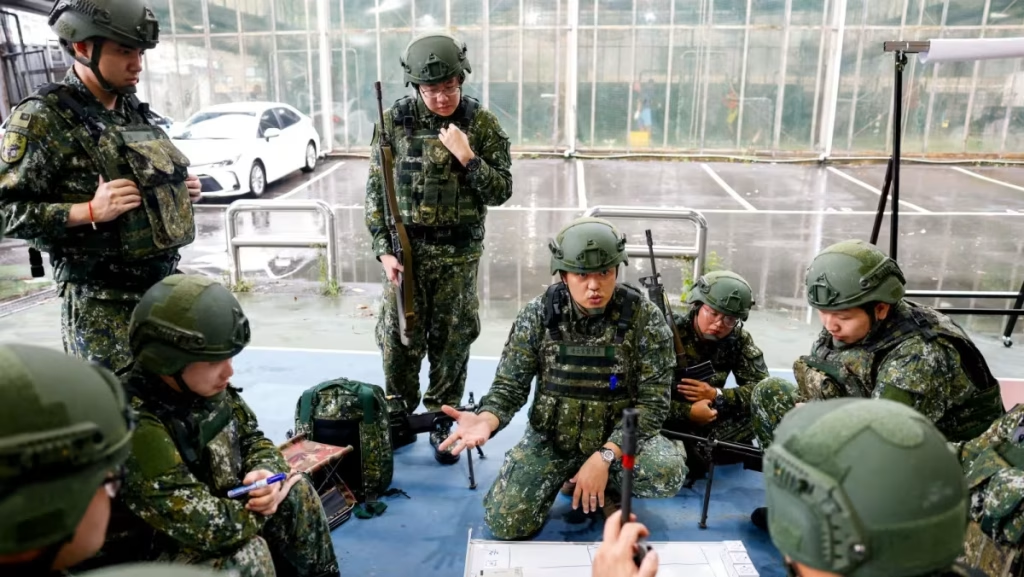
International: Taiwan’s Han Kuang Drills Defy China’s Threats
Unprecedented Military Mobilization
Taiwan has launched its largest-ever Han Kuang military exercises, spanning July 9 to July 18, 2025, in a bold response to escalating Chinese provocations. These 10-day live-fire drills, designed to simulate defense against a potential Chinese invasion, mark a significant escalation in Taiwan’s military preparedness. The exercises involve 22,000 reservists, a 50% increase from last year, alongside regular army, navy, and air force units.
Strategic Focus on Real-World Scenarios
Drawing lessons from the Ukraine conflict, Taiwan’s defense strategy emphasizes countering disruptions to communication systems and repelling initial assaults. The drills simulate unscripted scenarios, including grey-zone tactics and long-range precision strikes, to test troops’ adaptability in a potential 2027 invasion scenario. This shift reflects Taiwan’s aim to enhance operational readiness amid China’s increasing military pressure.
Deployment of Advanced Weaponry
For the first time, Taiwan will deploy US-supplied High Mobility Artillery Rocket Systems (HIMARS) and domestically developed Sky Sword missiles. These assets aim to bolster defense of critical infrastructure, including ports and strategic sites, located just 160 kilometers from China’s coast. The inclusion of advanced weaponry underscores Taiwan’s intent to project deterrence and counter China’s naval and air incursions.
Urban Resilience and Civilian Integration
The 2025 Han Kuang exercises incorporate Urban Resilience Exercises, merging military operations with civilian evacuation drills to prepare for prolonged conflict. Conducted with the Ministry of the Interior, these drills involve air-raid warnings and infrastructure protection, fostering a whole-of-society defense approach. This marks a pivotal shift toward comprehensive national resilience against potential Chinese aggression.
China’s Vehement Response
China’s Ministry of National Defense condemned the exercises as “bluffing” and a “self-deceiving trick” by Taiwan’s Democratic Progressive Party (DPP). Colonel Jiang Bin asserted that the drills would not deter China’s “reunification” efforts, labeling them provocative. Beijing’s rhetoric follows its recent military maneuvers, including deploying 76 warplanes and 13 vessels near Taiwan, heightening regional tensions.
Geopolitical Stakes and Regional Implications
The Han Kuang drills signal Taiwan’s resolve to counter China’s territorial claims, backed by US support through arms supplies and diplomatic affirmations. Amid fears of a broader conflict involving the US, Taiwan’s exercises aim to deter Beijing while reinforcing domestic confidence in its defense capabilities. The outcome of these drills could reshape cross-strait dynamics and influence regional stability.