

NATIONAL: Shah’s Bill: Jail Means Exit for Politics?
Groundbreaking Legislative Proposal
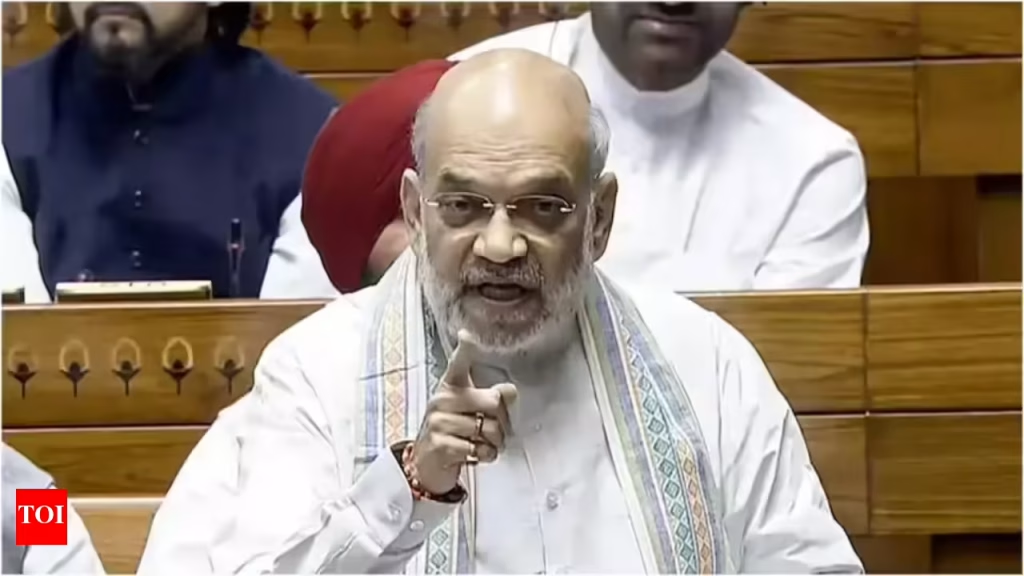
Union Home Minister Amit Shah, addressing an event in Kerala, unveiled a pioneering bill introduced in the Lok Sabha, targeting the removal of elected officials detained for serious offenses.
This marks a historic initiative, unprecedented in India’s 75 years of independence, aimed at enforcing accountability among public representatives.
The legislation stipulates that leaders, including the prime minister or chief ministers, arrested and detained for 30 consecutive days on charges carrying a minimum five-year sentence, will forfeit their positions on the 31st day.
Critique of Governance from Custody
Shah referenced former Delhi Chief Minister Arvind Kejriwal’s tenure, highlighting his administration’s operation from incarceration during the liquor policy controversy.
He questioned the ethical propriety of such governance, asserting that immediate resignation upon arrest could have obviated the need for this legislative measure.
The Home Minister emphasized that the absence of such provisions in the original Constitution likely stemmed from an unforeseen scenario where jailed individuals would assume public office.
Moral Imperative in Democratic Governance
Shah underscored the necessity for both ruling and opposition entities to uphold moral responsibility in a democratic framework.
He argued that the bill addresses a critical gap in governance ethics, preventing the perpetuation of authority by those under serious criminal allegations.
The legislation, now under review by a Joint Parliamentary Committee, seeks to institutionalize a mechanism ensuring that public trust is not undermined by leaders facing prolonged detention.
Historical Context and Opposition Concerns
Reflecting on past governance, Shah noted that no similar crises emerged during BJP’s rule in Delhi, suggesting a contrast in administrative integrity.
He rebuffed opposition queries on the bill’s necessity, framing it as a response to evolving challenges in political accountability.
Critics, however, argue that the bill risks misuse, potentially enabling targeted arrests to destabilize opposition-led administrations, a contention that has sparked vigorous parliamentary debate.