

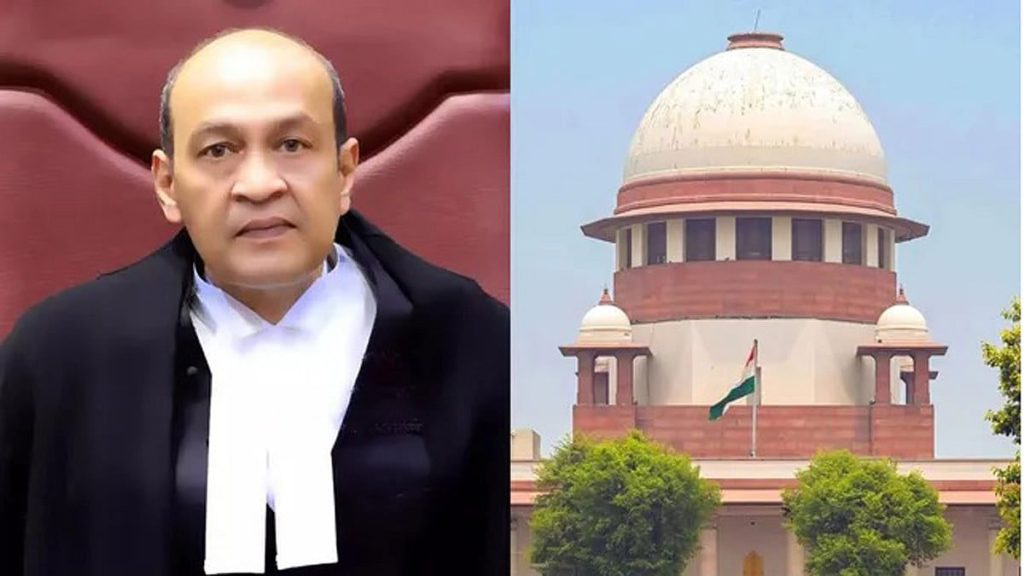
NATIONAL: SC Retracts Ban on Allahabad HC Judge’s Criminal Roster
Reversal of Judicial Directive
The Supreme Court of India rescinded its August 4 order barring Allahabad High Court Justice Prashant Kumar from adjudicating criminal cases until his retirement in May 2029. The decision, made by a bench comprising Justices J.B. Pardiwala and R. Mahadevan, followed a letter from Chief Justice of India (CJI) Bhushan R. Gavai requesting reconsideration. The reversal addresses concerns over judicial overreach and administrative authority.
CJI’s Intervention
The Supreme Court acted on CJI Gavai’s undated letter, which highlighted institutional unease about the original directive’s implications. The bench clarified that its intent was not to embarrass Justice Kumar but to safeguard judicial integrity. The initial order stemmed from Kumar’s erroneous ruling allowing criminal proceedings in a civil dispute, deemed a “travesty of justice.
Allahabad High Court’s Resistance
Thirteen Allahabad High Court judges, in a letter to Chief Justice Arun Bhansali on August 7, 2025, urged a Full Court meeting to resist the Supreme Court’s directive. They argued that the Supreme Court lacks administrative superintendence over high courts, citing the Allahabad High Court Rules, 1952. This collective stance prompted the Supreme Court’s reconsideration.
Persistent Concerns Over Judicial Propriety
Despite retracting the restriction, the Supreme Court maintained that Justice Kumar’s May 5, 2025, order was legally untenable. The bench emphasized that permitting criminal prosecution in a civil matter undermines public confidence in the judiciary. Such rulings, they noted, necessitate corrective measures to uphold judicial standards.
Original Order’s Context
The August 4 directive followed Justice Kumar’s refusal to quash a criminal case in a commercial dispute involving M/s Shikhar Chemicals, despite its civil nature. The Supreme Court had criticized the ruling as “one of the worst” and directed Kumar to sit in a division bench with a senior judge, citing a pattern of erroneous orders.
Implications for Judicial Autonomy
The episode underscores tensions between judicial and administrative authority within India’s court system. The Supreme Court’s initial intervention raised questions about its oversight over high court rosters, while the retraction reflects deference to institutional harmony. The judiciary now faces the challenge of balancing accountability with autonomy.