

INTERNATIONAL: Inqilab Mancha Demands Cancellation of Indian Work Permits
Sharif Osman Hadi, a 32-year-old student leader and founder of Inqilab Mancha, was shot in Dhaka on December 13. Critically injured, he received treatment in Singapore but succumbed on December 18.
His death ignited widespread protests across Bangladesh. Demonstrators targeted media outlets and Awami League properties, venting anger over perceived injustices.
Suspects’ Alleged Escape to India
Bangladesh police claimed two key suspects in Hadi’s murder fled across the border into India’s Meghalaya state. They reportedly crossed via Haluaghat in Mymensingh district.
Indian authorities, including the Border Security Force and Meghalaya police, dismissed these allegations as baseless. New Delhi condemned the reports, calling them fabricated to stir anti-India sentiments.
Inqilab Mancha’s 24-Day Ultimatum
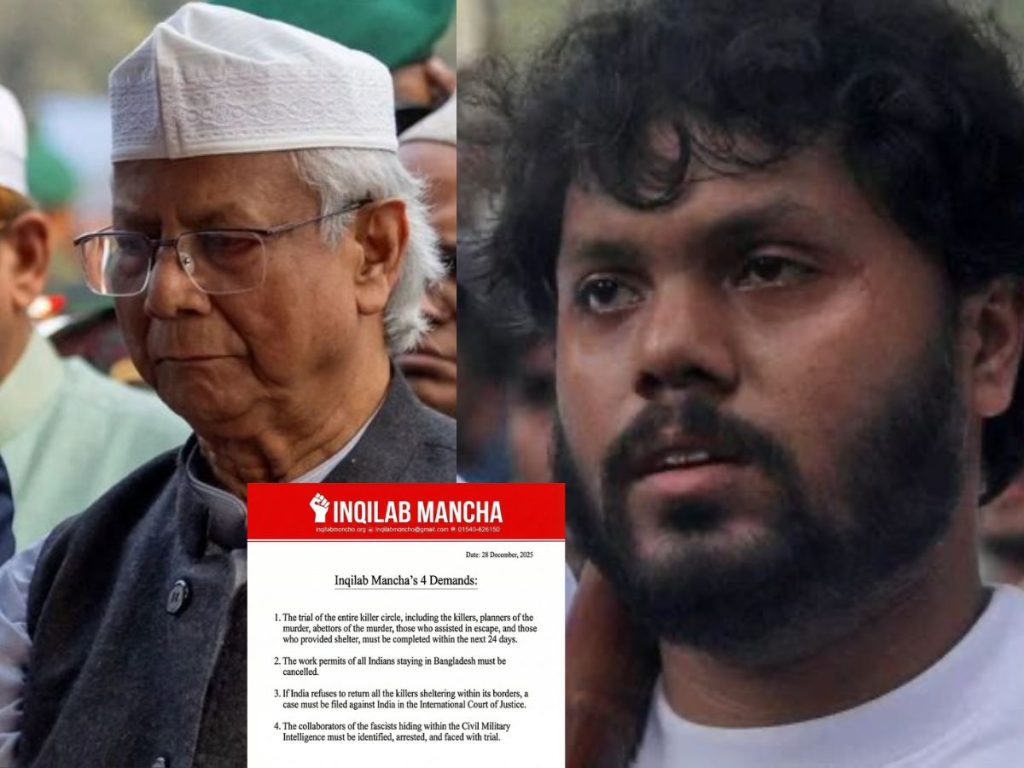
The group issued a stern 24-day deadline to Muhammad Yunus’s interim government for resolving the case. Failure could lead to mass agitation and calls for regime change.
Protests escalated with blockades in major cities like Dhaka and Chattogram. Mourners at Hadi’s funeral chanted slogans emphasizing national sovereignty over foreign influence.
Key Demands for Justice
Inqilab Mancha outlined four main requirements to address the killing:
- Try all involved parties, from the shooter to planners and enablers, within 24 days.
- Cancel work permits for Indian citizens to safeguard Bangladesh’s independence.
- Pursue legal action against India at the International Court of Justice if it refuses to extradite Sheikh Hasina and Awami League figures.
- Prosecute officials issuing conflicting statements on the investigation.
Broader Anti-India Sentiments
Hadi was known for his vocal opposition to Indian influence, including advocating for a “Greater Bangladesh” concept. His followers now amplify these views amid the probe.
The demands reflect deep frustrations with alleged foreign meddling. Yunus’s administration faces pressure to balance domestic unrest and international relations.
Government and International Responses
Bangladesh’s foreign ministry rebuffed India’s concerns over minority attacks, labeling them as exaggerated. It urged focus on isolated crimes rather than systemic narratives.
India maintains no evidence supports the escape claims. Observers worry about strained bilateral ties ahead of Bangladesh’s upcoming elections.
Potential for Further Unrest
With the ultimatum ticking, Inqilab Mancha called for nationwide demonstrations. Thousands gathered at Shahbagh, pledging to continue until demands are met.
The situation highlights political instability in post-Hasina Bangladesh. Families and activists seek closure, while the government navigates complex allegations.