

NATIONAL: NISAR Soars: NASA-ISRO’s Bold Leap in Earth Observation
Historic Launch from Sriharikota
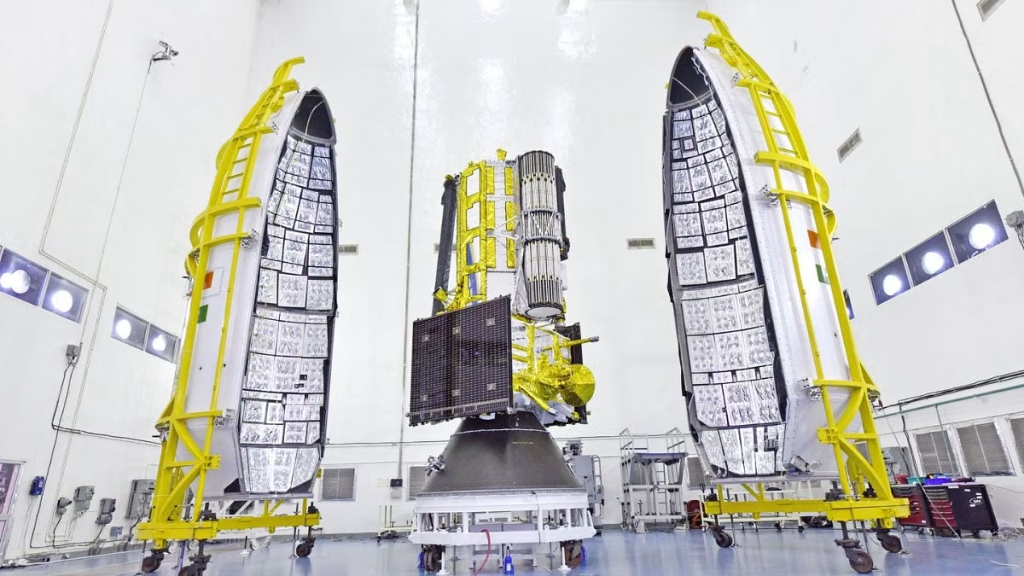
The GSLV-F16 carrier rocket, launched from the Satish Dhawan Space Centre in Sriharikota, Tirupati district, successfully deployed the NASA-ISRO Synthetic Aperture Radar (NISAR) satellite. The 2,392 kg satellite separated at an altitude of 747 km, precisely 18.59 minutes after liftoff. This milestone marks a significant achievement in Indo-American space collaboration.
Pioneering Joint Venture
NISAR represents the first satellite jointly developed by the Indian Space Research Organisation (ISRO) and the National Aeronautics and Space Administration (NASA). With NASA contributing $1.16 billion and ISRO investing $90 million, it stands as the most expensive satellite ever launched by the partnership. The mission underscores a shared commitment to advancing space technology.
Advanced Earth Observation Capabilities
Designed to be one of the most powerful Earth observation satellites, NISAR’s synthetic aperture radar will deliver unparalleled data on Earth’s surface. It will monitor ecosystems, climate change, and geological phenomena with high precision. The satellite’s capabilities are poised to revolutionize environmental and disaster management studies.
Technical and Financial Scope
The GSLV-F16’s precise deployment highlights ISRO’s expertise in launch operations, while the satellite’s development reflects NASA’s technological prowess. The $1.25 billion project combines cutting-edge radar systems with robust engineering. This synergy positions NISAR as a cornerstone of global Earth science research.
Future Implications for Space Research
NISAR’s launch paves the way for enhanced global monitoring and data-driven decision-making. Its data will support applications in agriculture, water resource management, and hazard mitigation. The mission sets a precedent for future international collaborations in space exploration.