

International: Nepal’s Fiery Youth Revolt: Chaos Ahead?
In the heart of the Himalayas, Nepal grapples with unprecedented political turmoil as of September 10, 2025. Prime Minister K.P. Sharma Oli’s abrupt resignation has ignited a firestorm of unrest, leaving the nation on the brink of constitutional disarray. This crisis, fueled by youth-led demonstrations, underscores deep-seated frustrations in a fragile democratic framework.
The Spark of Unrest
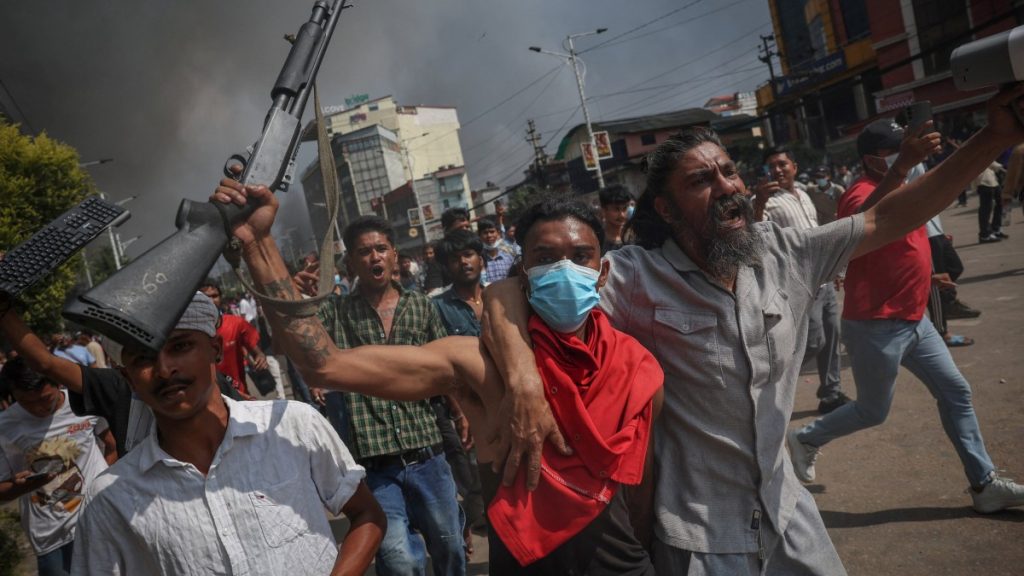
The immediate catalyst emerged in late August 2025 when the government imposed a sweeping ban on major social media platforms. Officially justified as a measure against tax evasion and unregistered operations, the restriction was perceived by many as an authoritarian clampdown on free expression. Within days, this policy morphed into widespread outrage, drawing thousands of young Nepalis to the streets of Kathmandu and beyond.
Protests quickly escalated, with demonstrators demanding not just the ban’s reversal but systemic reforms. By early September, clashes between protesters and security forces had claimed at least 22 lives and injured hundreds, according to reports from international observers.
Gen Z at the Forefront
Nepal’s Generation Z, comprising tech-savvy youth aged 18 to 25, has spearheaded this movement, leveraging encrypted apps to organize despite the blackout. Their grievances extend far beyond digital access, targeting entrenched corruption and nepotism within the political elite. Social media’s restoration on September 8 failed to quell the fervor, as videos of torched government buildings circulated virally.
Key demands articulated by protest leaders include:
- Immediate resignation of all implicated cabinet members.
- Transparent investigations into corruption allegations against high-ranking officials.
- Reforms to address youth unemployment, which hovers around 20% in urban areas.
This demographic shift marks a departure from traditional party politics, injecting fresh vigor into Nepal’s civil society.
Government’s Fractured Response
Oli’s coalition administration, a tenuous alliance between the Communist Party of Nepal (Unified Marxist-Leninist) or CPN-UML and the Nepali Congress, unraveled under pressure. Four ministers, including three from the Congress faction, tendered resignations, exacerbating the power vacuum. The deployment of troops to enforce a nationwide curfew has restored a semblance of order in Kathmandu, yet sporadic violence persists.
Critics argue that the use of lethal force by police on September 8 violated international human rights standards, prompting calls from the United Nations for impartial probes. As parliament lies in charred ruins, the interim leadership faces immense scrutiny to stabilize governance.
Root Causes of Instability
At its core, Nepal’s political volatility stems from chronic coalition fragility, a hallmark since the 2008 abolition of the monarchy and the adoption of a federal republic. Frequent shifts in alliances—over a dozen prime ministers in 17 years—have stymied policy continuity, fostering economic stagnation and public disillusionment.
Corruption scandals, including embezzlement in infrastructure projects, have eroded trust in institutions. The Maoist insurgency’s legacy from 1996 to 2006 lingers, as unfulfilled promises of equitable development perpetuate inequality. Border disputes with India and policy flip-flops have further strained diplomatic and economic ties.
Youth disenfranchisement amplifies these issues: despite remittances fueling 25% of GDP, domestic job scarcity drives mass migration. The social media ban symbolized a broader failure to adapt to digital-era aspirations, igniting latent resentments.
Historical Echoes
Nepal’s trajectory mirrors a pattern of cyclical upheaval. The 1990 People’s Movement ended absolute monarchy, paving the way for multiparty democracy. Yet, the 2015 constitution’s federal restructuring, while progressive, ignited ethnic tensions and implementation hurdles.
Subsequent governments, including those under Pushpa Kamal Dahal and Sher Bahadur Deuba, grappled with similar coalition breakdowns. The 2025 protests evoke the 2006 April Revolution, where mass mobilization toppled King Gyanendra, highlighting how youth activism can catalyze profound change.
Prospects for Resolution
Experts foresee prolonged uncertainty unless a national unity government emerges, potentially involving opposition parties like the Maoist Centre. President Ram Chandra Paudel may dissolve parliament for fresh elections, but logistical challenges amid curfews complicate this path. International actors, including India and China, watch closely, given Nepal’s strategic position.
Reforms targeting anti-corruption mechanisms and youth empowerment could restore legitimacy. However, without addressing socioeconomic disparities, the embers of dissent may reignite, testing the resilience of Nepal’s nascent democracy.