

INTERNATIONAL: Mexico’s Gen-Z Protests Turn Violent
Thousands of young demonstrators flooded the streets of Mexico City this weekend, channeling deep frustration over unchecked crime and entrenched corruption.
What began as a peaceful rally quickly swelled into a bold challenge to the status quo, with crowds demanding accountability from the highest levels of power.
The air crackled with urgency as voices united in calls for real change.
The Spark Behind the Streets
At the core of these outbursts lies a festering discontent among Mexico’s youth, particularly those from Generation Z.
Recent spikes in violent crime, including the brutal murder of a local mayor known for his anti-cartel stance, have pushed many to their breaking point.
Protesters point fingers at systemic failures, arguing that promises of reform have rung hollow under the current administration.
This wave of activism draws inspiration from global youth movements, blending social media savvy with raw street energy.
Organizers highlight how impunity shields the powerful while everyday lives hang in the balance.
In cities beyond the capital, similar gatherings echoed the sentiment, underscoring a nationwide rift.
March on the National Palace
The focal point of the unrest zeroed in on the National Palace, the iconic seat of executive power in Mexico’s historic heart.
As the sun climbed high on Saturday, marchers converged on the Zocalo square, banners fluttering with slogans like “No More Blood” and “Justice Now.” Their target: a direct confrontation with symbols of authority.
In a surge of defiance, groups dismantled the sturdy iron barriers encircling the palace grounds.
Chants grew louder, ropes and makeshift tools in hand, as the crowd pressed forward.
Eyewitnesses described a mix of determination and desperation, with some hooded figures leading the charge toward the fortified entrance.
Escalation into Chaos
Tensions boiled over when security forces moved to hold the line, sparking a brutal back-and-forth.
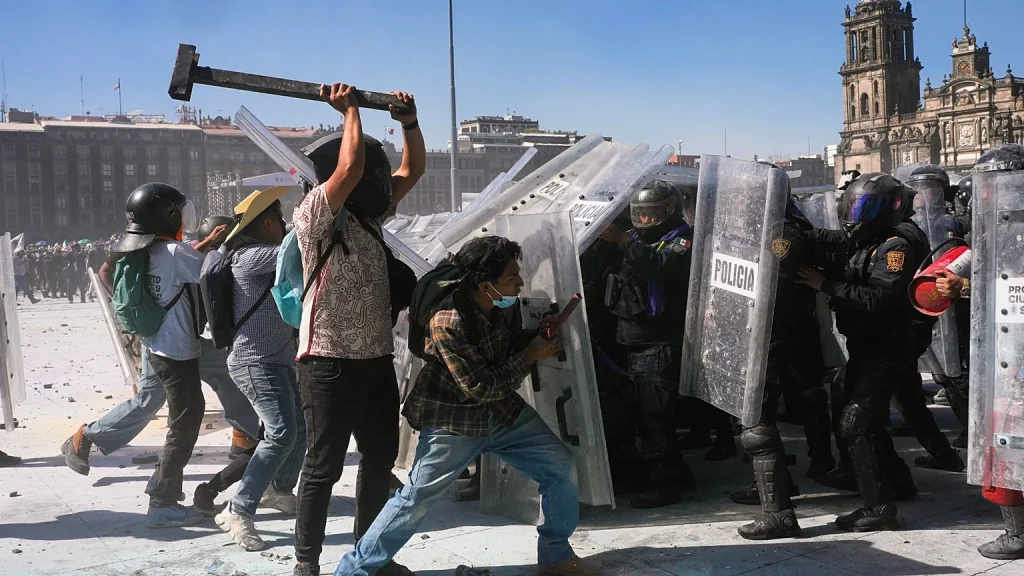
Riot police, equipped with shields and gas canisters, faced off against protesters hurling stones, wooden bats, and even flaming bottles.
The once-orderly protest dissolved into pockets of mayhem, with tear gas clouds stinging eyes and lungs across the plaza.
Reports from the scene paint a picture of pandemonium: officers pinned down by barrages, demonstrators coughing through the haze yet refusing to scatter.
Local media captured footage of scuffles spilling into nearby alleys, where the fight for ground turned personal.
Authorities later decried the violence as an assault on public order, while activists framed it as a desperate cry for survival.
Toll of the Turmoil
The human cost emerged starkly by evening, with medical teams overwhelmed by the wounded.
Official tallies put the injured at around 120, the majority being police officers bearing the brunt of improvised weapons.
Hospital corridors filled with cases ranging from bruises and cuts to more severe impacts from thrown objects and crowd crushes.
No fatalities were reported, a small mercy amid the fray. Both sides traded accusations: protesters claimed excessive force from law enforcement, while officials pointed to agitators exploiting the genuine grievances of the young.
As night fell, cleanup crews swept debris from the battered fences, a reminder of fragile lines between dissent and disorder.
Echoes of a Generation
These events signal more than a one-off flare-up; they reflect a youth awakening to Mexico’s enduring struggles. With social platforms amplifying their message, Gen Z voices demand not just policy tweaks but a wholesale rethink of governance.
Ties to the ruling Morena party came under fire, with crowds jeering its leadership for perceived inaction on cartel grip and graft.