

INTERNATIONAL: Massive Earthquake Hits Japan, Tsunami Alerts Issued
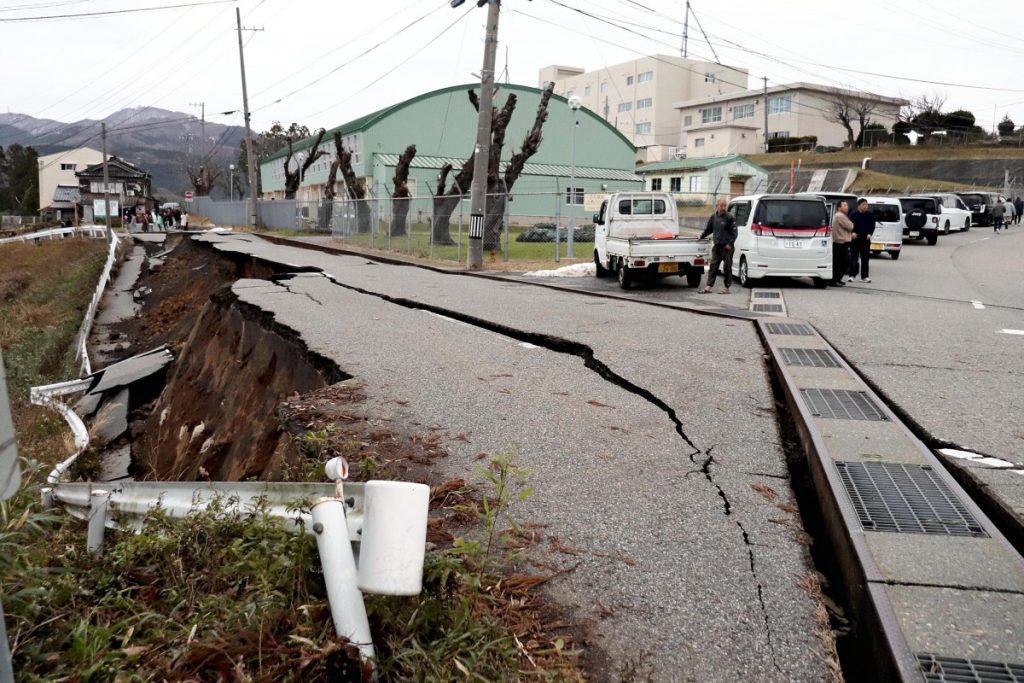
A fierce 7.6 magnitude earthquake ripped through northeastern Japan just after 11:15 p.m. local time on Monday, December 8, sending shockwaves that buckled floors and toppled shelves in homes across the region.
Centered about 80 kilometers off Aomori Prefecture’s coast at a depth of 50 kilometers, the quake registered upper-6 intensity on Japan’s scale in Aomori, making it nearly impossible for folks to stand.
In Hakodate on Hokkaido, residents like those at local news offices watched helplessly as books and files cascaded down, a stark snapshot of the chaos unfolding.
This wasn’t a distant rumble; it was the kind that yanks you from dinner tables, hearts pounding as the ground sways like a ship in storm.
For families in coastal towns, the sudden jolt carried echoes of past traumas, turning quiet evenings into frantic scrambles for safety.
Tsunami Sirens Pierce the Panic
Within minutes, the Japan Meteorological Agency blared tsunami warnings across Hokkaido, Aomori, and Iwate, urging some 90,000 people to higher ground amid fears of waves up to three meters high.
Actual surges hit milder notes: 20 to 70 centimeters in ports like Erimo and Kuji, enough to lap at seawalls but sparing the worst.
Evacuation orders cleared beaches and low-lying spots, with NHK reporters in Sapporo describing a 30-second horizontal shake that left them sprawling.
Imagine the wail of alerts cutting through the night, parents bundling kids into cars while neighbors shout updates over garden fences.
These drills-turned-reality test the grit of communities long schooled in survival, where every siren drills home the stakes.
No Casualties, But Ripples Linger
As dawn broke Tuesday, relief washed in: no deaths or serious injuries tallied, though thousands in Aomori lost power and trains ground to a halt between Sendai and Shin-Aomori.
East Japan Railway paused Shinkansen lines, stranding travelers in dimly lit stations, while minor outages flickered across the grid.
Tohoku Electric confirmed no hiccups at nuclear sites like Onagawa, a nod to safeguards honed since 2011’s meltdown scars.
Yet the human toll simmers quietly: a sleepless night for elders reliving old fears, small businesses eyeing flooded lots come morning.
It’s the unseen shakes to confidence that hit hardest, even when the big one spares the unthinkable.
Echoes of November’s Wake-Up Call
Barely a month ago, on November 9, a 6.9 magnitude shaker off Iwate Prefecture rattled the same northern stretch at 5:03 p.m., spawning advisories for waves up to one meter that fizzled to 20-centimeter ripples in Miyako and Ofunato.
Aftershocks up to 6.3 followed, briefly blacking out homes and delaying bullet trains, but no major harm surfaced by evening’s end.
The JMA lifted alerts after eight o’clock, chalking it up to the Pacific’s restless churn.
These back-to-back tremors feel like nature’s insistent drumbeat, reminding coastal dwellers that calm seas hide undercurrents.
For locals, it’s another chapter in a story of resilience, where each event sharpens the edge of readiness without dulling the spirit.
Ring of Fire’s Relentless Grip
Japan’s perch on the volatile Pacific Ring of Fire fuels this seismic symphony, where four tectonic plates grind in a dance of destruction and renewal.
The nation logs a tremor every five minutes on average, claiming 20 percent of the globe’s magnitude-6-plus quakes, yet strict codes turn skyscrapers into sway-not-snap fortresses.
Public drills and early-warning apps stand as quiet guardians, drilled into daily life like morning rice.
In the faces of those who evacuate without hesitation, you see it: a blend of fatalism and fight that turns peril into progress.
These quakes don’t just shake earth; they forge a people who rebuild bolder, whispering that survival is the ultimate defiance.