

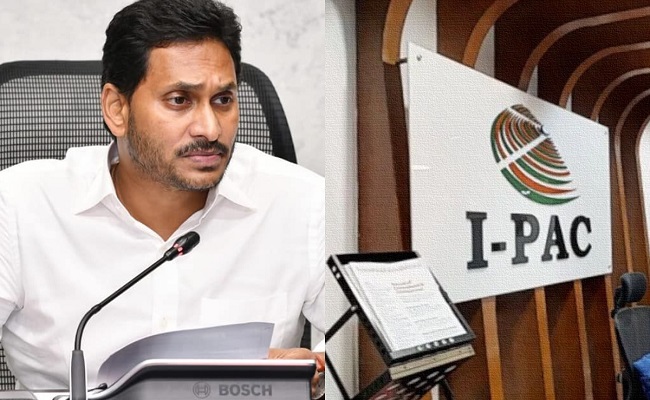
ANDHRA PRADESH: From I-PAC to Independence: YSRCP’s High-Stakes Rebuild
From I-PAC Triumph to Electoral Collapse
In 2019, the Indian Political Action Committee (I-PAC), under strategist Prashant Kishor, played a decisive role in steering the Yuvajana Sramika Rythu Congress Party (YSRCP) to a landslide victory. The approach was data-driven, meticulously structured, and aggressively executed.
However, after Kishor’s exit, leadership passed to Rishiraj Singh, whose altered strategies—most notably the “Why Not 175” campaign—failed to resonate. The result was a steep decline in YSRCP’s fortunes, culminating in a heavy electoral defeat and the loss of political dominance.
The Fallout with I-PAC
Post-defeat assessments within YSRCP revealed deep dissatisfaction over I-PAC’s operational rigidity. Cadres and leaders alike were expected to conform entirely to the agency’s directives, leaving little room for local adaptability.
The lack of precise ground-level feedback mechanisms compounded strategic miscalculations. After the 2024 results, I-PAC wound up its operations in Vijayawada. Even when a January 2025 reentry proposal emerged, internal opposition led to a decisive rejection by party leadership.
Jagan’s Self-Reliance Strategy
Learning from this, party president Y. S. Jagan Mohan Reddy has pivoted towards self-reliance. The core principle: no more outsourcing of political strategy.
Instead, the focus is on mobilizing and activating YSRCP’s grassroots network through direct engagement, joint district-level meetings, and strict internal discipline. Jagan’s tours are now marked by orchestrated displays of cadre participation, designed to foster loyalty and morale.
Building a “Jagan’s Army”
Central to the new approach is the creation of a robust internal organisational framework:
- Formation of a jumbo Political Affairs Committee (PAC)
- District-to-booth level committee appointments
- Activation of 30 affiliated associations tied to the party’s functional arms
- Completion of village and mandal-level posts, targeting a force of 14–18 lakh committed workers
The intention is to transform this network into a disciplined “Jagan’s Army” capable of sustaining continuous political engagement.
Village-Level Strength as the Core Strategy
YSRCP’s revised calculus is straightforward: strengthen the base, the top will follow. The party’s leadership believes that if the organisational spine—built from the booth to the state level—is fortified, electoral success will be an inevitable byproduct.
The approach also includes revitalising the party’s digital presence, aligning it with offline activism for maximum political traction.
The Road Ahead
With four years remaining before the next electoral battle, Jagan’s vision hinges on an enduring grassroots infrastructure. The party is betting that this inward-looking, cadre-first model will not only insulate it from external strategic dependencies but also restore its political edge. Whether this gamble will restore YSRCP’s position or leave it isolated in a changing political landscape remains an open question.