

INTERNATIONAL: China’s Diplomacy Rescues Thailand-Cambodia Ceasefire
Fragile Ceasefire Faces Early Challenges
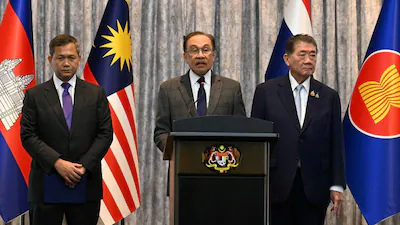
Malaysia’s Prime Minister Anwar Ibrahim announced an immediate and unconditional ceasefire between Thailand and Cambodia, following deadly border clashes.
However, Thailand accused Cambodian forces of breaching the agreement within 24 hours, reporting overnight gunfire in multiple areas, including Phu Makhuea near Sisaket province. This violation threatened the fragile truce, necessitating urgent diplomatic intervention.
China’s Mediation in Shanghai
China hosted an informal trilateral meeting in Shanghai, led by Vice Foreign Minister Sun Weidong, with representatives Kung Phaok from Cambodia and Jullapong Nonsrichai from Thailand.
Both nations reaffirmed their commitment to the ceasefire, expressing appreciation for China’s role in de-escalating tensions. The meeting, described as frank and harmonious, marked a pivotal step in stabilizing the region.
Background of the Border Conflict
Tensions along the 800-km Thailand-Cambodia border escalated after a landmine explosion on July 24 wounded five Thai soldiers, following a May incident that killed a Cambodian soldier.
The conflict, rooted in longstanding disputes over areas like Phu Makhuea, has displaced over 260,000 people and claimed at least 41 lives. The ceasefire, initially brokered in Malaysia, faced immediate strain due to mutual accusations of aggression.
International Diplomatic Efforts
The ceasefire was facilitated by US pressure, with President Donald Trump and Secretary of State Marco Rubio urging both nations to halt hostilities, linking compliance to trade negotiations.
China’s involvement, including Foreign Minister Wang Yi’s communications and shuttle diplomacy, complemented ASEAN’s mediation led by Malaysia. The US and Malaysia have pledged to monitor the ceasefire’s implementation.
China’s Constructive Role
China’s Foreign Ministry emphasized its lack of selfish interests in the conflict, supporting ASEAN’s “political settlement” approach.
The Shanghai meeting underscored China’s growing diplomatic influence in Southeast Asia, balancing US efforts.
Both Cambodian and Thai representatives acknowledged China’s constructive role in fostering dialogue and reinforcing the ceasefire.
Regional and Humanitarian Impact
By July 30, signs of calm emerged, with some displaced residents returning to their homes near the Ta Muen Thom temple and Phrong village.
However, many remain in evacuation shelters, uncertain of sustained peace. The conflict’s toll, including damaged infrastructure like a gas station in Oddar Meanchey, highlights the need for robust enforcement mechanisms.
Outlook for Lasting Peace
The reaffirmed ceasefire remains fragile, with Thailand’s earlier preference for bilateral talks giving way to multilateral mediation under US and Chinese pressure.
Ongoing monitoring by the US, Malaysia, and China aims to prevent further violations. The resolution of this dispute could strengthen regional stability and ASEAN’s diplomatic framework.