

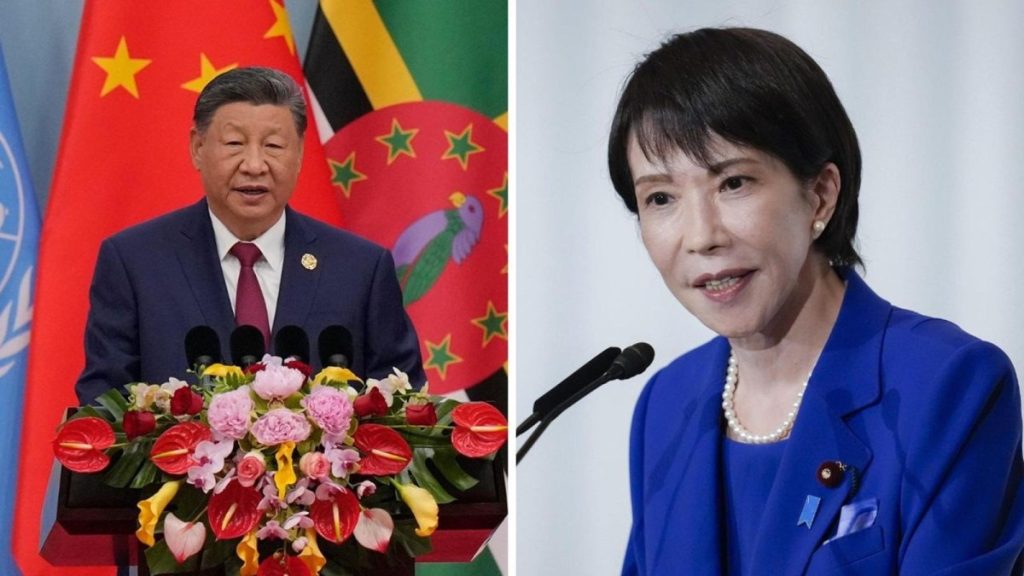
INTERNATIONAL: China Warns Japan for ‘Crossing the Line’
Tensions between China and Japan spiked this week after Tokyo’s new leader hinted at potential military action over Taiwan.
Prime Minister Sanae Takaichi’s parliamentary remarks have drawn sharp rebuke from Beijing, which views the island as its core territory.
This exchange escalates a long-simmering dispute, testing diplomatic boundaries in East Asia.
Takaichi’s Provocative Statement
In a recent Diet session, Prime Minister Takaichi described a possible Chinese naval blockade or assault on Taiwan as a “survival-threatening situation” for Japan.
She argued such moves could justify deploying Japan’s Self-Defense Forces, citing national security laws from 2015.
The comments, made amid high-stakes regional talks, mark a bolder tone from Tokyo on cross-strait stability.
Beijing’s Immediate Backlash
China’s Foreign Ministry swiftly condemned the remarks as “shocking” and a dangerous provocation.
Spokesperson Lin Jian labeled them a “serious affront to international justice” and a threat to post-World War II norms.
Beijing warned that any Japanese intervention would face a “firm response,” framing it as an act of aggression.
Diplomatic and UN Escalation
China’s UN Ambassador Fu Cong penned a letter to Secretary-General Antonio Guterres, accusing Takaichi of breaching international law.
The missive highlighted Japan’s historical actions in Taiwan during colonial rule and vowed to protect sovereignty.
Foreign Minister Wang Yi echoed this, urging global responsibility to curb “Japanese militarism’s resurgence.”
Broader Measures and Impacts
Beijing issued a travel advisory for its citizens visiting Japan, citing safety concerns.
It also reinstated bans on Japanese seafood imports, hitting economic ties hard.
Live-fire drills near Japanese waters and increased coast guard patrols around disputed islands add to the pressure.
These developments strain recent efforts to stabilize Sino-Japanese relations, following Takaichi’s October meeting with President Xi Jinping.
As rhetoric heats up, the international community watches closely, wondering if this spat signals deeper shifts in Asia’s power balance.