

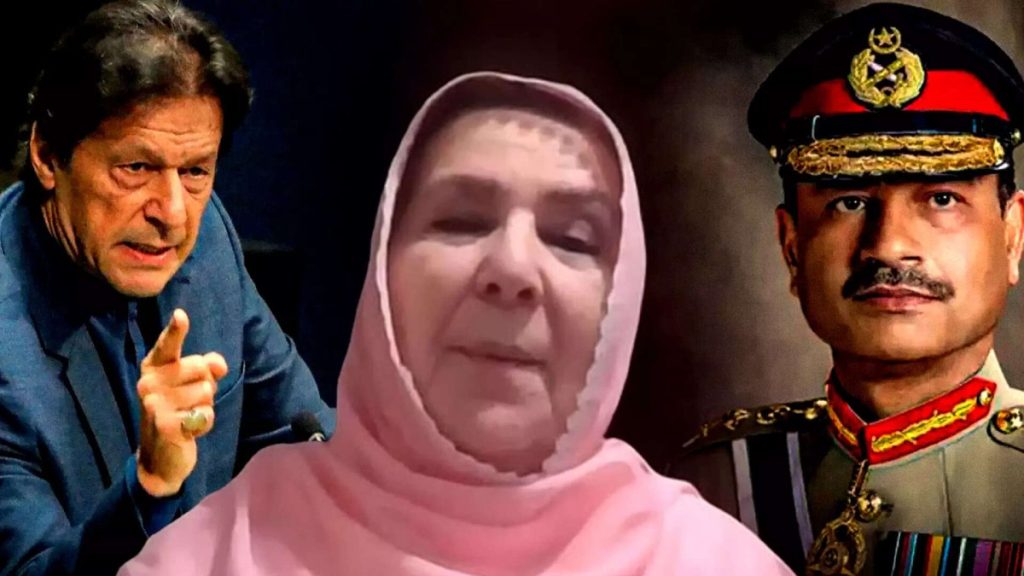
INTERNATIONAL: Asim Munir ‘Eager for War with India,’ Says Imran Khan’s Sister
Imran Khan’s sister Aleema Khan unleashed sharp criticism against Pakistan’s Army Chief General Asim Munir during a recent media interview.
She branded him a radical Islamist driven by conservative fervor, claiming this mindset fuels his desire for confrontation with India.
Aleema contrasted this with her brother’s vision of harmony across the border.
Roots in the Pahalgam Horror
The remarks tie back to a devastating terror strike on April 22, 2025, in Pahalgam, Jammu and Kashmir.
Gunmen targeted tourists, killing 25 Indians and one Nepali national in the deadliest civilian assault since 2008.
This tragedy, linked to the group The Resistance Front, ignited national outrage and swift retaliation.
India’s Operation Sindoor
In response, India initiated Operation Sindoor on May 7, launching precision strikes that dismantled nine terror facilities in Pakistan-occupied Kashmir.
The four-day escalation saw aerial exchanges before a ceasefire restored uneasy calm on May 10. Both sides reported minimal losses, yet the episode deepened mutual distrust.
Munir’s Role in the Escalation
Aleema directly faulted Munir for provoking such flare-ups, alleging his ideology prompts clashes whenever tensions simmer.
“He yearns for war with India,” she stated, arguing this harms Pakistan, India, and their partners alike. Her words paint a picture of internal rifts shaping foreign policy.
Imran as Peace Advocate
Throughout his tenure, Imran Khan pursued warmer ties with India, even engaging positively with the BJP, Aleema highlighted.
She portrayed him as a committed liberal and freedom fighter, undeterred by current hardships. This narrative underscores a family legacy of bridge-building amid strife.
Uzma’s Emotional Jail Encounter
On December 2, Uzma Khanum, another sibling, gained rare access to Imran at Adiala Jail after weeks of health rumors.
She confirmed his physical well-being but decried ongoing psychological torment. Imran reportedly pinned his detention squarely on Munir’s influence.
Charges Against the Regime
Uzma lambasted the Pakistani establishment for stifling dissent and oppressing citizens through fabricated cases.
She demanded broader family visits, noting Imran’s isolation as a tool of suppression. Protests by PTI supporters outside the prison amplified calls for justice.
Echoes of Fragile Diplomacy
These family disclosures spotlight enduring India-Pakistan frictions, where personal vendettas intersect with security dilemmas.
As both nations eye future talks, voices like Aleema’s urge restraint over rivalry. The ceasefire holds, but underlying grievances linger, testing regional stability.