

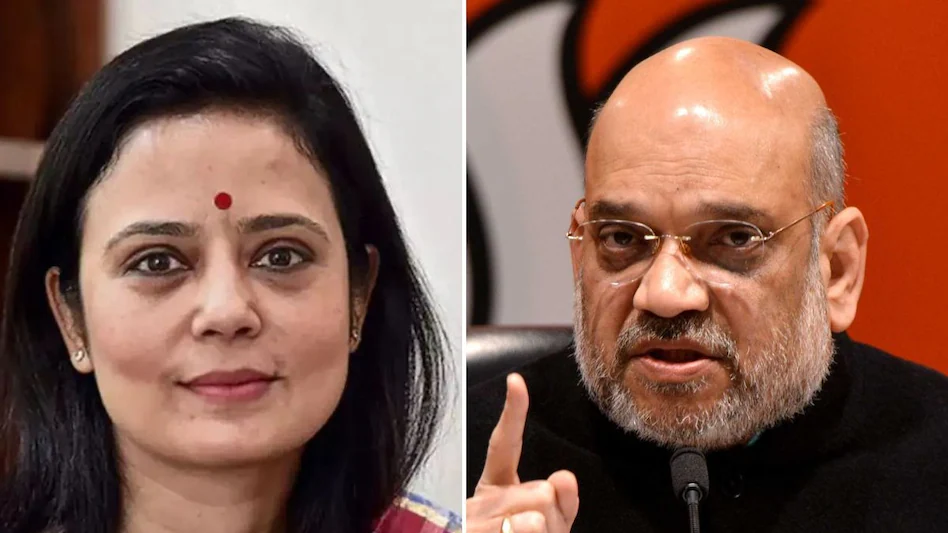
NATIONAL: Moitra’s Call to Behead Shah Sparks Storm
Controversial Remarks
Trinamool Congress parliamentarian Mahua Moitra unleashed scathing criticism against Union Home Minister Amit Shah, attributing border security lapses to central oversight.
Addressing journalists in Nadia district, West Bengal, she highlighted the Border Security Force’s role under the Home Ministry in curbing infiltration from Bangladesh.
Moitra asserted that persistent unauthorized entries undermine national integrity, questioning accountability for such failures.
Rhetorical Escalation
Moitra employed hyperbolic language, suggesting Shah‘s symbolic decapitation as a response to alleged inefficiencies in safeguarding frontiers.
She juxtaposed Prime Minister Narendra Modi’s public statements on infiltrators with the government’s purported inaction.
This rhetoric underscored perceived dereliction, emphasizing that five paramilitary entities report directly to the Home Ministry.
Border Security Critique
The legislator interrogated the efficacy of deployments along the Indo-Bangladesh boundary, citing daily incursions despite robust patrols.
She implicated these lapses in exacerbating local grievances, including encroachments and societal disruptions. Moitra’s discourse framed the issue as a federal responsibility, deflecting blame from regional administrations.
Political Backlash
Bharatiya Janata Party functionaries condemned Moitra’s statements as inflammatory and antithetical to democratic norms.
They queried whether her views reflect Trinamool Congress’s official stance, demanding clarifications from party leadership.
The episode has amplified partisan tensions amid ongoing debates on transboundary migration.
Legal Repercussions
A formal grievance was lodged against Moitra at Krishnanagar Kotwali police station by complainant Sandeep Majumdar.
Bharatiya Janata Party representatives labeled the comments objectionable, urging investigative action. As of now, Trinamool Congress has withheld commentary on the matter.
Broader Implications
This confrontation highlights entrenched divisions over federal-state dynamics in immigration enforcement.
It underscores the politicization of security protocols amid bilateral strains with Bangladesh.