

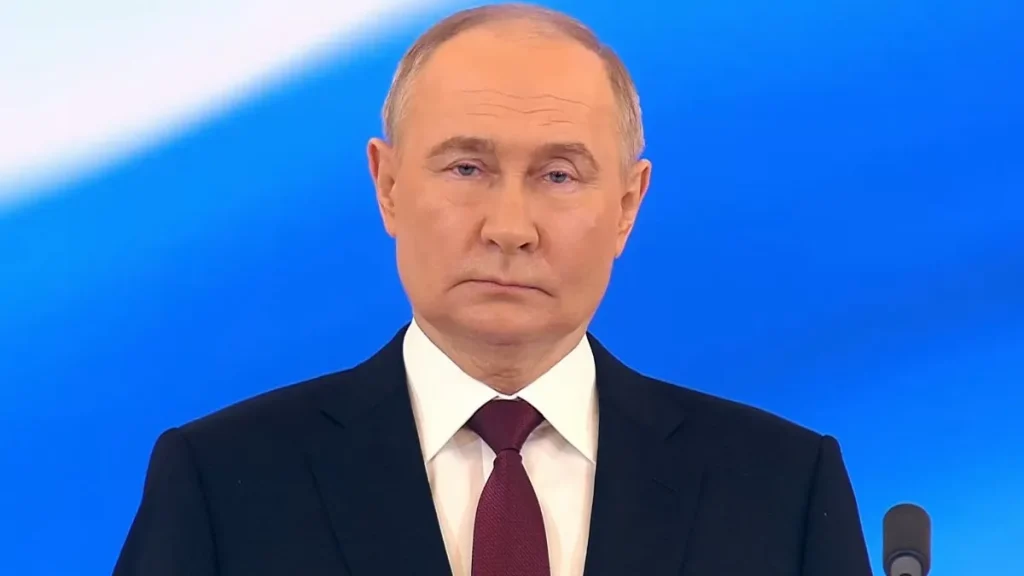
INTERNATIONAL: ‘If You Want War, We’re Ready’ – Putin Warns Europe
Russian President Vladimir Putin has drawn a sharp line, signaling Russia’s preparedness to defend against any European aggression while pointing fingers at continent leaders for derailing Ukraine peace efforts.
His remarks, delivered amid delicate diplomacy, underscore the fragile balance in ongoing conflict resolution.
The timing amplifies the tension, coinciding with direct U.S. engagement that could reshape alliances and battle lines.
Putin’s Firm Stance
Putin addressed reporters with unyielding clarity, stating that Russia seeks no confrontation with Europe but stands fully equipped should one arise.
He framed European capitals as barriers to a viable settlement in Ukraine, insisting their demands remain unacceptable.
This rhetoric echoes longstanding Kremlin narratives, yet it arrives at a pivotal moment when fresh U.S. proposals hang in the balance.
Analysts see it as both a deterrent and a negotiation tactic, aimed at pressuring allies to soften their positions.
Moscow’s Extended Dialogue
In the Kremlin’s ornate halls, U.S. Special Envoy Steve Witkoff and Jared Kushner, President Trump’s son-in-law and advisor, held a marathon session with Putin lasting over five hours.
The group delved into revisions of a U.S.-backed peace framework, covering territorial claims, security assurances, and reconstruction aid.
Kremlin aides described the exchange as productive, though no breakthroughs emerged on core disputes like sovereignty over annexed regions.
Both sides agreed to further consultations, hinting at cautious momentum.
Key discussion points included:
- Neutrality commitments for Ukraine.
- Phased troop withdrawals.
- Economic incentives for compliance.
Zelensky’s Measured Welcome
Ukrainian President Volodymyr Zelensky offered a tempered endorsement of the updated U.S. plan, noting it appears stronger following recent tweaks.
He pledged ongoing collaboration with Washington and European partners, emphasizing Kyiv’s red lines on territorial integrity.
This response reflects Ukraine’s strategic bind: embracing dialogue to secure aid while guarding against concessions that could erode hard-won ground.
Zelensky’s team highlighted progress on humanitarian corridors and sanctions relief as potential wins.
Shadows Over Resolution
Putin’s words cast a long shadow, potentially chilling European resolve and complicating NATO cohesion.
As talks evolve, the risk lingers that bold warnings could harden into actions, testing the West’s unity.
Yet, the mere fact of sustained U.S.-Russia contact offers a sliver of hope, reminding observers that even in deadlock, quiet channels persist.
For Ukraine, caught in the crossfire, every revision counts toward a sustainable calm.