

INTERNATIONAL: Trump Supports Limited H-1B Visas, Says White House
President Donald Trump’s evolving views on H-1B visas have sparked debate among his base and business leaders alike.
Once a staunch critic of the program, Trump now acknowledges the need for skilled foreign talent to fuel American innovation.
This shift comes amid efforts to attract global investment while prioritizing domestic employment.
A Policy Pivot Under Scrutiny
In a recent Fox News interview, Trump stated that the United States lacks certain specialized skills, making H-1B visas essential for companies investing billions domestically.
He emphasized that such workers should train Americans before departing, ensuring long-term job security for citizens.
This marks a departure from his earlier rhetoric, which blamed the visas for displacing U.S. professionals.
Critics within his supporter circle argue the comments undermine the “America First” agenda.
Social media buzzed with accusations of softening on immigration, with some polls showing a dip in approval among working-class voters.
Yet Trump doubled down, insisting the program must serve national interests without undercutting locals.
White House Clarifies the Stance
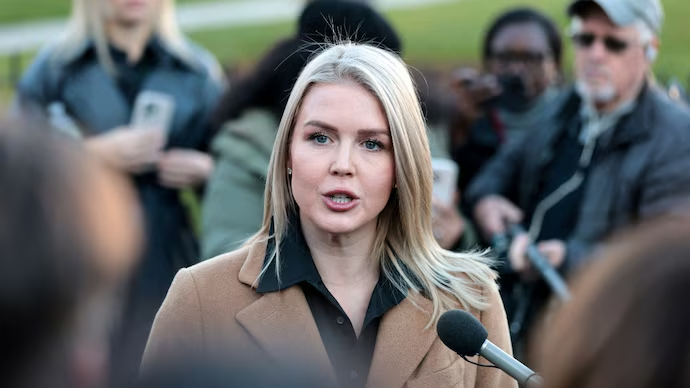
Press Secretary Karoline Leavitt addressed reporters to quell confusion, affirming Trump’s commitment to American workers.
She described the approach as “nuanced and common-sense,” aimed at curbing abuses while welcoming investors who build factories and create jobs.
Leavitt highlighted ongoing investigations into visa fraud, with over 100 cases under review by federal agencies.
Key assurances from Leavitt:
- No replacement of U.S. jobs by foreign hires.
- Foreign firms must commit to hiring Americans post-training.
- Tariffs and trade deals remain tools to boost manufacturing.
This framework ties visas to economic growth, like battery production hubs, without permanent reliance on overseas labor.
The Controversial Fee Hike
Back in September, Trump signed an executive order imposing a one-time $100,000 fee on new H-1B applications, a move designed to deter exploitation.
The policy does not affect existing visa holders or those abroad seeking reentry. Businesses decried it as a barrier to talent, while labor advocates praised the revenue for worker protections.
Global reactions ranged from confusion to concern, with tech hubs in India and elsewhere rushing filings before implementation.
The White House vowed to defend the fee against lawsuits, viewing it as a first step in reforming the system.
Navigating Investment and Protection
Trump’s strategy blends incentives for foreign capital with safeguards for locals, reflecting broader trade policies.
Recent deals encourage trillions in investments, coupled with requirements for skill transfers. Supporters see it as pragmatic evolution; detractors fear it dilutes core promises.
As implementation unfolds, the administration pledges transparency through regular updates.
This balancing act could redefine how the U.S. competes globally, testing Trump’s ability to unite his coalition.