

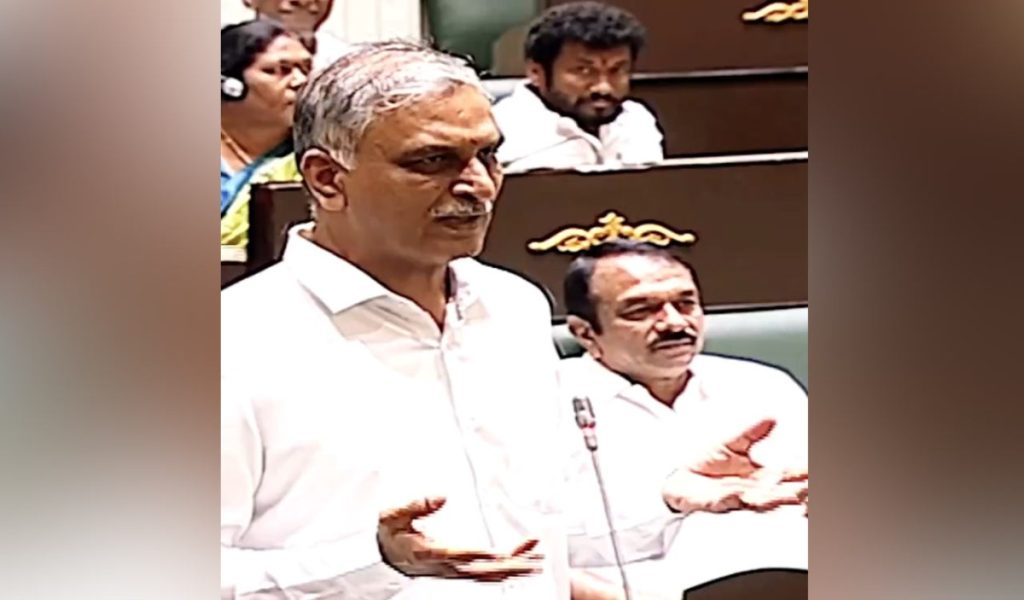
TELANGANA: Harish Rao’s Fiery Rebuttal to Kaleshwaram Probe
Former Telangana Irrigation Minister T. Harish Rao advocated for transparency in deliberations on the Kaleshwaram Lift Irrigation Scheme inquiry, emphasizing the necessity for public awareness of factual underpinnings.
He contested arbitrary allegations, proposing an equitable platform for discourse. This stance was articulated amid legislative scrutiny of the Justice Pinaki Chandra Ghose Commission’s findings.
Demand for Extended Speaking Allocation
Harish Rao queried the feasibility of addressing a comprehensive 660-page document within a constrained 30-minute timeframe, deeming it impracticable for substantive analysis.
He expressed readiness to engage in prolonged sessions over successive days to facilitate thorough examination. Such an approach, he argued, would ensure equitable representation of perspectives.
Critique of Report Tabling Protocol
The legislator inferred ulterior motives from the commission report’s presentation in the legislative chamber on a non-session day, Sunday, without prior intimation.
This maneuver, he posited, revealed strategic intent to circumvent robust debate. He characterized the proceedings as orchestrated political theatrics.
Pursuit of Judicial Redress
Harish Rao affirmed the constitutional prerogative to seek judicial intervention, citing precedents involving prominent figures like Indira Gandhi and L.K. Advani in analogous inquiries.
He clarified that legal recourse aimed at invalidating the report, not impeding its legislative discussion. This distinction underscored adherence to democratic norms.
Impartiality Under Scrutiny
Questioning the commission’s neutrality, Harish Rao invoked Supreme Court observations that deem such reports inconsequential if procedural impartiality is compromised.
He highlighted statutory mandates under Sections 8B and 8C of the Commissions of Inquiry Act, requiring notifications to implicated parties. Absence of these, he contended, renders the document legally untenable.
Parallels with Historical Commissions
Drawing analogies to the Shah Commission on the Emergency era, Harish Rao noted widespread condemnation by Congress affiliates for its unilateral formation and procedural deficiencies.
The apex court’s censure of that body for omitting 8B notices reinforced his argument. He labeled the current inquiry as similarly partisan and conspiratorial.
Prognosis on Legal Viability
Harish Rao predicted the Ghose Commission’s output would falter under judicial review, branding it as fabricated and devoid of substantive merit.
He reiterated that recourse to courts stems from rights infringement, not evasion of accountability. This position aligns with broader jurisprudence on administrative fairness.