

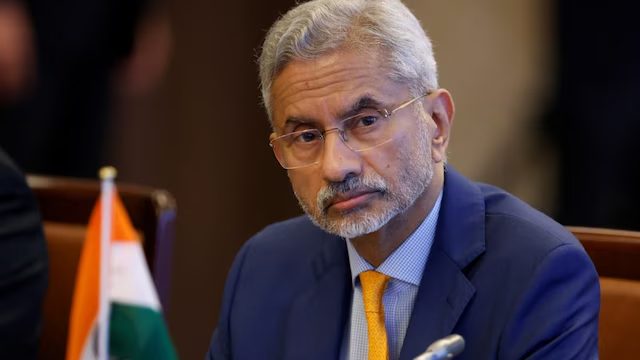
Jaishankar Rebuts Trump’s Claims on India-Pakistan Ceasefire
Clarification on Ceasefire Negotiations
India’s External Affairs Minister S. Jaishankar has clarified that the recent ceasefire agreement with Pakistan was achieved through direct bilateral talks, dismissing claims of U.S. mediation. Speaking in a Dutch television interview, he emphasized that the agreement stemmed from military-to-military discussions via established hotlines.
Trump’s Mediation Narrative
U.S. President Donald Trump repeatedly claimed credit for brokering the ceasefire, asserting it prevented a potential nuclear conflict between India and Pakistan. Jaishankar countered that the U.S. was not directly involved, stating, “America was in America,” and that India insisted on direct talks with Pakistan.
Details of the Agreement
On May 10, 2025, Pakistan’s military initiated contact, expressing readiness to halt firing, leading to an agreement finalized at 3:35 p.m. IST between the Directors General of Military Operations. Jaishankar noted that the ceasefire, effective from 5:00 p.m. IST, was a result of India’s firm stance.
International Engagements
While the U.S., including Vice President J.D. Vance and Secretary of State Marco Rubio, engaged with Indian and Pakistani officials, Jaishankar clarified that such interactions were routine during tensions. Multiple countries, including the UAE, UK, and France, also held discussions, but none mediated the ceasefire.
Criticism of Pakistan’s Leadership
Jaishankar sharply criticized Pakistan’s leadership, particularly Army Chief Asim Munir, for fostering religious extremism. He referenced the killing of 26 individuals in a terror attack in Pahalgam, Jammu and Kashmir, as evidence of Pakistan’s deliberate use of religion to ignite conflict.
Operation Sindoor Continues
The minister reaffirmed India’s commitment to Operation Sindoor, a military response to cross-border terrorism, underscoring the country’s uncompromising stance. He emphasized that India’s focus remains on addressing terrorism and the return of Pakistan-Occupied Kashmir (PoK).
Domestic Political Reactions
The Indian National Congress criticized Prime Minister Narendra Modi for not publicly refuting Trump’s mediation claims, questioning the implications of his silence. Congress leaders, including Mallikarjun Kharge and Rahul Gandhi, reiterated a 1994 parliamentary resolution demanding Pakistan vacate PoK.
Context of Tensions
The ceasefire followed days of intense cross-border clashes, triggered by a terrorist attack in Pahalgam that killed 26 people. Both nations accused each other of violations shortly after the agreement, though the truce has largely held.
India’s Stance on Mediation
India has historically opposed third-party mediation in its disputes with Pakistan, citing the 1972 Simla Agreement. Jaishankar’s remarks align with this policy, emphasizing bilateral resolution over external involvement.
Implications for Diplomacy
The episode highlights India’s assertive diplomatic approach and its resistance to external narratives in bilateral matters. The ceasefire’s stability remains under scrutiny, with ongoing discussions about Kashmir and water disputes.