

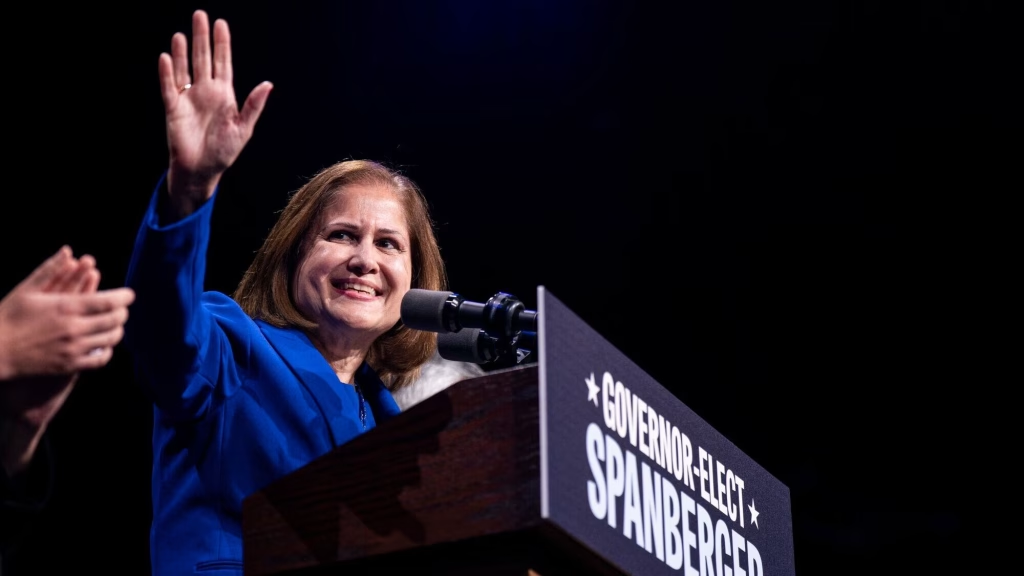
INTERNATIONAL: Hyderabadi Ghazala Hashmi: Virginia’s First Muslim Lt. Gov.
Ghazala Hashmi’s triumph in Virginia’s lieutenant governor race shatters barriers once again for Indian-origin leaders in American politics.
The 61-year-old Democrat, born in Hyderabad, India, clinched the position on November 4, 2025, defeating Republican John Reid with 53% of the vote.
Her victory makes her the first Muslim woman elected to statewide office in the U.S., a poignant milestone in a year of progressive surges.
Hashmi’s path weaves personal grit with public service. She edged out five primary challengers in June, capturing 28% of the Democratic vote amid a crowded field that included former Richmond Mayor Levar Stoney.
Now, as she steps into a role presiding over the state Senate, potentially casting tie-breaking votes in a slim 20-19 Democratic majority, eyes turn to her agenda on education and health.
Childhood Spanning Worlds
Hashmi entered the world in Hyderabad on July 5, 1964, spending her early years in her grandmother’s home in Malakpet.
Her grandfather served in the finance department of undivided Andhra Pradesh, grounding her in a legacy of public duty.
At age four, she relocated to Georgia with her mother and brother, joining her father, a PhD holder in international affairs who taught at a prominent university.
Those formative days in the American South shaped her resilience. Excelling academically, she earned scholarships that fueled her studies: a BA Honors in English from Georgia Southern University, followed by a PhD in literature from Emory University in Atlanta.
“Education was my bridge across oceans,” she once reflected in an interview, crediting it for opening doors in a new land.
Building a Legacy in the Classroom and Beyond
In 1991, after marrying Azhar, Hashmi settled in Richmond, Virginia, where she dedicated three decades to teaching at Reynolds Community College.
Her classroom became a space for nurturing diverse voices, much like the literature she studied stories of migration, identity, and quiet triumphs.
Politics called in 2019, when she flipped a Republican-held state Senate seat, becoming Virginia’s first Muslim and Indian-American legislator.
That win helped Democrats reclaim the chamber. By 2024, she chaired the Senate Education and Health Committee, pushing bills for contraception rights and school funding reforms, even as some faced vetoes.
Campaign of Quiet Conviction
Hashmi’s bid stayed low-key, dodging debates but leaning on grassroots momentum.
She focused on affordability tweaking school funding formulas and expanding health access, resonating with suburban voters weary of rising costs.
Attacks on her faith drew sharp rebukes from Muslim leaders as Islamophobic, yet she pressed on, securing endorsements from progressives nationwide.
In her election night speech at a Richmond watch party, Hashmi evoked her roots: “From Hyderabad’s bustling streets to these Virginia halls, we’ve carved a path of decency and dedication.” As the first South Asian-American in this office, her ascent echoes a broader wave of Indian diaspora influence in U.S. governance.
With Virginia’s governorship also flipping Democratic, Hashmi’s tenure could redefine legislative priorities.
But as she navigates a polarized Senate, the real test begins: Can one woman’s journey from immigrant child to statewide trailblazer heal divides or ignite them further?